Find your city

Type your city or ZIP code to see the best-rated septic service companies near you.

Get free quotes

Septic Tank Services in West Virginia

The best-rated septic service companies across West Virginia, plus state laws, permits and costs.

Looking for a septic tank in West Virginia service? This guide covers the top-rated companies in the state, the rules that govern septic systems, and what homeowners typically pay. Prices here reflect state ranges compared with national averages, so you can plan a pumping, inspection or installation with realistic expectations.

3 cities12 companiesavg. 4.8★

Top 6 septic service companies in West Virginia

The companies below are the best-rated septic providers in West Virginia, with ratings and review counts pulled from the directory. Check each company's services and location against your needs before booking.

Show map

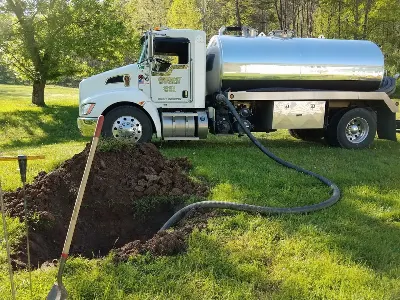
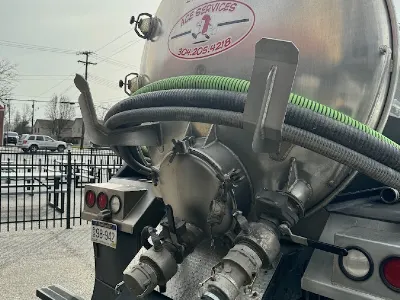
Ace Services LLC

4.8 (54) Charleston, WV 24/7

Customers value fast scheduling, same-day or next-morning availability, and crews who are polite and efficient. A recurring complaint is pricing, with one reviewer finding a pumping quote well above what another company charged.

  • Same-day service
  • Pumping
  • Pricing concerns

Services:PumpingService

Contact See reviews Best in Charleston →

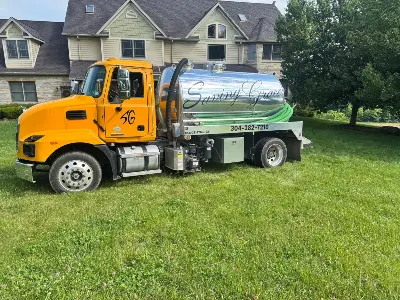
Saving Grace Septic & Rentals

5.0 (23) Morgantown, WV

Customers praise the company's punctual, tidy, and well-stocked units, along with easy scheduling and friendly drivers. Reviews focus almost entirely on portable toilet rentals and event setups, with little detail about septic tank work.

  • Portable toilets
  • Event rentals
  • Punctual service

Services:Service

Contact See reviews Best in Morgantown →

Septic Service Companies by city in West Virginia

Septic services in West Virginia are concentrated in a few cities, including Huntington, Charleston and Morgantown. Choose a provider in the city closest to your property for faster scheduling.

West Virginia Septic Tank Laws & Requirements

Septic systems in West Virginia are regulated at the state and county level, so the rules you follow depend on where your property sits. The state framework below explains who sets the standards and who enforces them.

Who regulates it West Virginia Department of Health and Human Resources (DHHR), Bureau for Public Health, Office of Environmental Health Services, Public Health Sanitation Division (On-Site Sewage Program). County or local health departments issue permits and enforce the rules.

Septic systems in West Virginia fall under the DHHR Bureau for Public Health rules 64 CSR 9 (sewage systems and tank cleaners) and 64 CSR 47 (design standards). County health departments handle permits, site evaluations and enforcement. Installation must be done by a state-certified Class I or Class II installer. I found no statewide rule requiring an inspection at sale or a fixed pumping interval in the official sources.

1

West Virginia Septic Tank Laws

Septic systems in West Virginia fall under the rules 64 CSR 9 for sewage systems and tank cleaners, and 64 CSR 47 for design standards. The West Virginia Department of Health and Human Resources (DHHR), through its Bureau for Public Health and Public Health Sanitation Division, sets the framework. County or local health departments issue permits and enforce the rules on the ground, so your county office is the first place to confirm requirements for your lot.

2

West Virginia Septic Tank Requirements

Installation must be carried out by a state-certified Class I or Class II installer, and anyone installing or modifying a system needs a permit from the county or local health department before work begins. Design standards include minimum distances: no part of an individual system may sit within 10 feet of a building, foundation or property line, and a septic tank must be at least 50 feet from a private well. Metal tanks are not approved, and plastic, fiberglass and concrete tanks must meet Commissioner approval.

3

West Virginia Septic Code

The design standards are set in 64 CSR 47, which the Secretary of State lists as active with a version effective July 1, 2025. Some county-hosted copies are older, so confirm the current numbers with your health department before planning a project. Businesses that pump or haul tank contents need a statewide permit and must submit quarterly logs, and the state does not set a mandatory homeowner pumping interval in the official sources reviewed.

Key rules at a glance (10), with official sources
TopicRuleSource
Who regulatesSewage disposal systems are governed by 64 CSR 47 and 64 CSR 09 and enforced by local health departments, according to the Jefferson County Health Department.jchdwv.org
Current design ruleThe Secretary of State's site lists 64-47 (Sewage Treatment and Collection System Design Standards) as active with a version effective 7/1/2025 under W. Va. Code 16-1-4 and 16-1-9. Some county-hosted copies and the DHHR excerpt PDF are older (2003) versions, so confirm current numbers with your health department.apps.sos.wv.gov
Permit requiredNo onsite sewer system may be installed in Jefferson County without a permit from the health department. The permit expires one year after issuance and is non-transferable.jchdwv.org
Soil evaluationBefore a sewage permit is issued the soil must be evaluated, and a percolation (perk) test is the first step (Braxton County Health Department).braxtoncountyhealthdepartment.com
Application processOnly the owner may apply on form SS-182A, and a certified WV septic installer completes their portion. Jefferson County sanitarians have 21 business days to approve or deny. That county's posted fees are Class I $250, Class II $540, plus a $30 DEP fee for new tank installations; fees vary by county.jchdwv.org
Setbacks (building and property line)Under the 64 CSR 47 individual-system section (DHHR excerpt, 2003 text), no part of an individual sewage system may be within 10 feet of a building, foundation or property line. It also may not be within 25 feet of a public water supply line or within 10 feet of a private water supply line.nicholashealthwv.com
Setback from private wellA septic tank, home aeration unit, vault privy or other sewage tank must be at least 50 feet from a private water well or groundwater supply. The drainfield well distance is in Table 64-47-K, which I could not confirm from an official source.hancockcountyhealthdepartment.com
Tank standardsMetal septic tanks are not approved. Inlets and outlets must be at least 4 inches in diameter with flexible watertight seals. A tank set deeper than 12 inches below grade needs a manhole riser extending to within 12 inches of final grade. Plastic and fiberglass tanks must be approved by the Commissioner, and concrete tank manufacturers must obtain Commissioner approval.oehs.wvdhhr.org
Pumping and tank cleanersThe official sources I found set no mandatory homeowner pumping interval. Businesses that collect, remove, transport or dispose of tank contents need a statewide permit and must submit quarterly logs (form SS-193). The permit expires one year from issuance.jchdwv.org
Inspection at property saleI found no state-level requirement for a septic inspection at property sale in the official sources. Confirm with the county health department, and note that a secondary site says none is required statewide.septictankhub.com

Official sources:WV DHHR - On-Site Wastewater ManagementWV DHHR - Public Health Sanitation DivisionWV DHHR - 64 CSR 47 excerpts, Individual and On-Site Sewage Systems (ES-52)WV DHHR - 64 CSR 9 excerpts on sewage tank cleaningWV Secretary of State - Rule 64-47 versionsJefferson County Health Department - Environmental Health & Permitting

Rules change and some counties add their own. Check with your county health department before you start work.

Septic Tank permits and licenses in West Virginia

Anyone installing or modifying a septic system needs a permit from the county or local health department before construction starts. The owner submits form SS-182A with the certified installer's portion and a site sketch, and the soil must be evaluated first through a percolation test. Permits are valid for one year and are non-transferable. Fees vary by county; in Jefferson County, the posted fees are $250 for Class I and $540 for Class II, plus a $30 DEP fee for new tank installations.

How much does septic tank pumping cost in West Virginia?

Across West Virginia, septic tank pumping typically runs $260 to $505, with an average of $385. That is below the national range of $290 to $565 and the national average of $430. Installation follows the same pattern: the state range is $3,130 to $10,740, with an average of $6,710, compared with a national average of $7,500. Repairs average $1,655 in the state versus $1,850 nationally, and drain field work averages $7,160 versus $8,000. Costs depend on tank size, access and soil conditions.

ServiceIn West VirginiaNational
Septic Tank Pumping Cost $260 – $505 $290 – $565 -10%
Septic Tank Installation Cost $3,130 – $10,740 $3,500 – $12,000 -11%
Septic Tank Maintenance $270 – $445 $300 – $500 -10%
Septic Tank Inspection $180 – $805 $200 – $900 -11%
Septic Tank Replacement Cost $2,685 – $8,950 $3,000 – $10,000 -11%
Septic Tank Cost $260 – $505 $290 – $565 -10%
Septic Tank Cleaning Cost $270 – $625 $300 – $700 -10%
Septic Tank Repair Cost $580 – $2,685 $650 – $3,000 -11%
Drain Field $2,685 – $13,425 $3,000 – $15,000 -11%
Aerobic Septic System $180 – $535 $200 – $600 -10%

Typical ranges: national prices adjusted to the cost of living in West Virginia (BEA regional price parities). Your quote depends on your property.

Use the cost calculator

Septic Tank services in West Virginia: FAQ

Do I need a septic tank permit in West Virginia?

Yes. Anyone installing or modifying a septic system needs a permit from the county or local health department before work starts. The owner applies on form SS-182A with the installer's portion, and the soil is evaluated first. Permits are valid for one year and cannot be transferred.

Do I need a license to install a septic system in West Virginia?

Installers must be certified by the DHHR Public Health Sanitation Division as Class I or Class II. Class II covers alternative systems. Septic tank cleaners, or pumpers, need a separate sewage tank cleaning permit.

How much does septic tank pumping cost in West Virginia?

Pumping in West Virginia typically costs $260 to $505, with an average of $385. That is lower than the national average of $430, though final pricing depends on tank size and access.

Get free quotes