| Who regulates | <cite index="3-1">The Onsite Wastewater Management Unit is a required service for local health departments under Michigan's Public Health Code, Act 368 of 1978</cite>, so your county or district health department is your main contact. | michigan.gov |
| No statewide code (pending bill) | <cite index="5-1">Senate Bill 771 would require EGLE to develop a Statewide Sewage Code within three years</cite>, and <cite index="4-5">it would require onsite systems to be examined every 10 years</cite>. A March 2026 report says Michigan still has no statewide code, and I did not find confirmation that SB 771 has become law, so check its current status. | michiganadvance.com |
| Local variation | <cite index="4-4">Only 12 of the 83 counties have septic ordinances, according to Flow Water Advocates</cite>. This figure comes from an advocacy group, not a state agency. I did not verify it, and other sources describe 45 local health departments each adopting their own sanitary codes. | circleofblue.org |
| Inspection at property sale | There is no statewide point-of-sale septic inspection requirement. <cite index="13-4">Time of Sale or Transfer ordinances are adopted by individual counties and communities</cite>, and <cite index="13-10">some are township-level rather than county-wide</cite>. | michigansepticguide.com |
| Example: Washtenaw County | <cite index="10-2">Washtenaw County's Time of Sale Program requires onsite well and septic systems to be inspected before a home can be sold</cite>, and <cite index="10-6">Environmental Health must review the inspection report</cite>. | content.civicplus.com |
| Failed systems at sale | <cite index="11-2">Where a time-of-sale ordinance applies and a system is determined to be failing, repair or replacement is required.</cite> | mymlsa.org |
| Setbacks (state criteria) | EGLE's Michigan Criteria for Subsurface Sewage Disposal lists <cite index="36-4,36-5,36-7">minimum isolation distances to wells of 200 ft for Type I and IIa wells, 75 ft for Type IIb and III wells, and 50 ft for single-family home wells</cite>. The criteria document is an older scan, so confirm the current numbers with your health department. | michigan.gov |
| Setbacks (other features) | The same EGLE criteria list <cite index="36-36,36-37">at least 10 ft from property lines and at least 100 ft from surface bodies of water</cite>, and <cite index="36-38">at least 15 ft from building foundations without footing drains</cite>. | michigan.gov |
| Setbacks (local) | A local health department application (Luce-Mackinac-Alger-Schoolcraft District Health Department) lists <cite index="33-4">a minimum of 50 ft from a residential well to septic tanks and to the absorption system</cite>. Local requirements can be stricter, so verify yours. | lmasdhd.org |
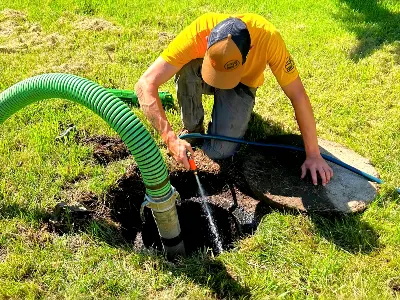
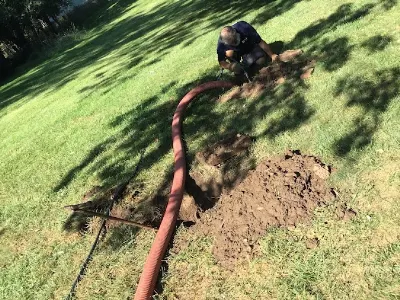
| Pumping/maintenance | I found no official statewide rule requiring routine pumping. A non-official guide says <cite index="7-5">EGLE and the Michigan Septic Tank Association recommend pumping every 3 to 5 years, but compliance is voluntary for conventional systems</cite>. Some local codes set their own pumping rules, which you should confirm locally. | septicseeker.com |
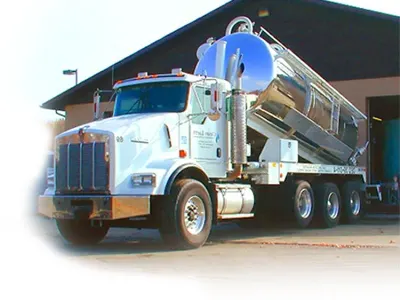
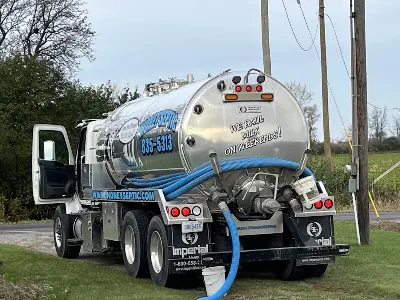
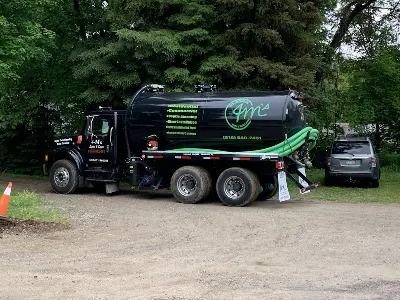
| Septage hauler licensing | <cite index="19-1">EGLE's Drinking Water and Environmental Health Division issues septic waste hauler licenses, vehicle licenses and land application site permits under Part 117</cite>. <cite index="19-3">Licensed haulers must keep records of the septage they transport and where they dispose of it.</cite> | michigan.gov |
| Hiring a pumper | <cite index="21-7">If a hauler is listed in EGLE's Septage Haulers Directory, it is licensed to do business in Michigan.</cite> | michigan.gov |
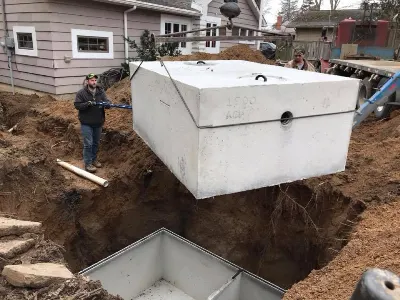
| Approved septic tanks | I did not find an official statewide list of approved septic tank models. Tank and system design approval appears to happen locally through the health department's permit review, and <cite index="14-10">one secondary source says conventional systems may be designed by the installer with health department approval</cite>. | septicandwell.com |