Find your city

Type your city or ZIP code to see the best-rated septic service companies near you.

Get free quotes

Septic Tank Services in Oklahoma

The best-rated septic service companies across Oklahoma, plus state laws, permits and costs.

Finding a reliable septic tank Oklahoma provider starts with knowing who regulates the work and what a fair price looks like. Oklahoma handles septic systems at the state level, so the rules you need are set by the Department of Environmental Quality. This page lists well-reviewed local companies, explains the state requirements for permits and certified installers, and compares typical project costs with national averages.

15 cities49 companiesavg. 4.8★

Top 10 septic service companies in Oklahoma

The companies below are among the highest rated in the directory, with ratings from 4.7 to 5 and review counts ranging from modest to very large. Use the ratings and review volume as a starting point, then call two or three providers to compare their service area and availability.

Show map

Milty's Boys Septic

5.0 (1,559) Bixby, OK 24/7

Customers appreciate the friendly, patient staff who explain options and help them save money, along with responsive technicians who arrive as scheduled. One reviewer reports that a routine maintenance visit caused an aerobic system to fail for weeks, which left them frustrated despite earlier satisfaction.

  • Maintenance plans
  • Responsive crews
  • Aerobic systems

Services:PumpingMaintenanceInstallationRepairAerobic Septic System Service
Contact See reviews Best in Bixby →

Septic Service Companies by city in Oklahoma

Listings cover a range of Oklahoma communities, from the Tulsa suburbs of Bixby and Owasso to Edmond, Norman, Midwest City, Shawnee and Muskogee. Providers in each area often know the local soil conditions and county requirements well, so it helps to choose a company that serves your specific town.

Oklahoma Septic Tank Laws & Requirements

Oklahoma septic work is governed by state rules rather than a patchwork of local ones, so the same core requirements apply wherever you live. The points below summarize who regulates the work, what must be permitted, and what owners are expected to maintain.

Who regulates it Oklahoma Department of Environmental Quality (DEQ), Environmental Complaints and Local Services Division (on-site sewage program)

Oklahoma regulates septic systems at the state level. DEQ issues permits and certifies installers under OAC Title 252, Chapter 641, and licenses pumpers and haulers under Chapter 645. The state does not require a septic inspection when a home is sold, but DEQ inspects new installations and repairs unless a DEQ-certified installer self-inspects them.

1

Oklahoma Septic Tank Laws

The Oklahoma Department of Environmental Quality (DEQ), through its Environmental Complaints and Local Services Division, is the agency that regulates on-site septic systems across the state. DEQ issues permits and certifies installers under OAC Title 252, Chapter 641, and licenses pumpers and haulers under Chapter 645. The state does not require a septic inspection when a home is sold, but DEQ does inspect new installations and repairs unless a DEQ-certified installer self-inspects the work.

2

Oklahoma Septic Tank Requirements

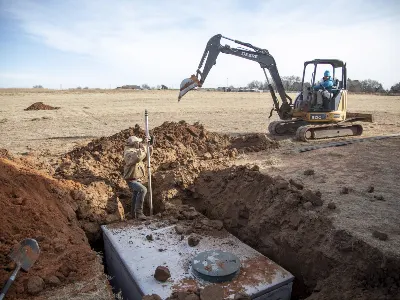
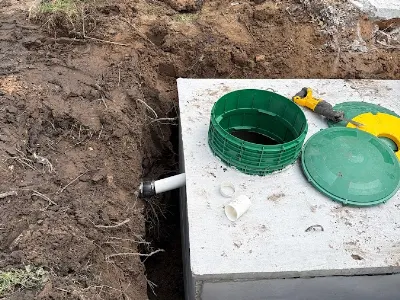
A new system or a modification to an existing one requires DEQ authorization or a permit to construct before work begins. A septic tank for a home with four or fewer bedrooms must hold at least 1,000 gallons, with 250 extra gallons required for each additional bedroom. Owners must keep the system working so sewage does not surface, pool or reach surface waters, and a malfunctioning system must be repaired promptly.

3

Oklahoma Septic Code

The septic code in Chapter 641 sets the design, construction, installation and operation standards for individual and small public on-site systems. Since November 1, 2025, anyone not certified through DEQ may install only one on-site sewage system per calendar year. Aerobic systems must be maintained by the installer for two years after installation at no extra cost to the owner, and DEQ inspection forms must document the required separation distances.

Key rules at a glance (10), with official sources
TopicRuleSource
Who regulatesDEQ is the permitting and regulatory agency for all on-site septic requests, and Chapter 641 sets the requirements for design, construction, installation and operation of individual and small public on-site sewage treatment systems.extension.okstate.edu
Local officesA secondary source says DEQ has 21 local offices that handle soil profiles, existing-system inspections, construction permits and final inspections. The OSU Extension fact sheet gives (405) 702-6100 as the DEQ phone number for permit, installation or compliance questions.servicetitan.com
Permit requiredBefore a new on-site system is installed or an existing one is modified, the installer must get DEQ authorization or a permit to construct, using Form 641-575 with the fee plus Form 641-581 (Report for On-Site Sewage) for the local DEQ office.law.cornell.edu
Installer certification and limits for non-certified installersUnder 59 O.S. 1158, installers must be certified by DEQ. Since Nov 1, 2025, anyone not certified through DEQ may install only one on-site sewage system per calendar year.oklahoma.gov
Inspections of new workIf a non-certified installer installs, repairs or modifies a system, DEQ must inspect it before any part is backfilled or put into operation. A DEQ-certified installer may self-inspect and leave the site without a DEQ inspection.extension.okstate.edu
Inspection at property saleThe state does not require a septic inspection before a home sale (OSU Extension, per a secondary source), though lenders often require one, especially on government-backed loans.tulsahousebuyer.com
Septic tank sizeA septic tank for a home with 4 or fewer bedrooms must hold at least 1,000 gallons, with 250 extra gallons required for each additional bedroom.law.cornell.edu
Owner maintenance dutyOwners must keep the system operating so that sewage does not surface, pool, flow across the ground or reach surface waters, and so that tanks do not leak or overflow. A malfunctioning system must be repaired promptly.okrules.elaws.us
PumpingAnyone in the business of pumping, hauling or disposing of septage must hold a DEQ license, and DEQ says periodic pumping of the septic tank is essential. The sources I found set no mandatory pumping interval for homeowners.deq.ok.gov
Aerobic systemsThe installer of an aerobic treatment system must maintain it for two years after installation at no extra cost to the owner. Setback distances are not stated in the sources I retrieved; DEQ says Chapter 641 sets the minimum separation distances and final inspection forms must show them.chickasha.gov

Official sources:DEQ On-Site Sewage TreatmentDEQ Initial Certification and LicensingDEQ FAQs for Changes Effective November 1, 2025DEQ Licensed Septage Pumpers and TransportersOAC 252:641-1-2.1 Authorizations and permitsOAC 252:641-7-4 Liquid capacity

Rules change and some counties add their own. Check with your county health department before you start work.

Septic Tank permits and licenses in Oklahoma

Before any new septic system is installed or an existing one is modified, the work needs a DEQ authorization or permit to construct. The application uses DEQ Form 641-575 with the fee, along with Form 641-581 submitted to the local DEQ office, and the installer usually files it on the owner's behalf. The fee on DEQ's online form appears to be around $357 for a standard request. Alternative systems need DEQ approval and plan review before installation, which can add time to your project.

How much does septic tank pumping cost in Oklahoma?

Typical septic work in Oklahoma tends to run below national averages. Pumping typically falls between $255 and $495, averaging $375, compared with a national range of $290 to $565 and an average of $430. Installation averages $6,590 in Oklahoma versus $7,500 nationally, and replacement averages $5,710 versus $6,500. Drain field work averages $7,025 in the state against $8,000 nationally, so Oklahoma owners generally pay less for most common septic services.

ServiceIn OklahomaNational
Septic Tank Pumping Cost $255 – $495 $290 – $565 -13%
Septic Tank Installation Cost $3,075 – $10,540 $3,500 – $12,000 -12%
Septic Tank Maintenance $265 – $440 $300 – $500 -13%
Septic Tank Inspection $175 – $790 $200 – $900 -12%
Septic Tank Replacement Cost $2,635 – $8,785 $3,000 – $10,000 -12%
Septic Tank Cost $255 – $495 $290 – $565 -13%
Septic Tank Cleaning Cost $265 – $615 $300 – $700 -13%
Septic Tank Repair Cost $570 – $2,635 $650 – $3,000 -12%
Drain Field $2,635 – $13,175 $3,000 – $15,000 -12%
Aerobic Septic System $175 – $525 $200 – $600 -13%

Typical ranges: national prices adjusted to the cost of living in Oklahoma (BEA regional price parities). Your quote depends on your property.

Use the cost calculator

Septic Tank services in Oklahoma: FAQ

Do I need a septic tank permit in Oklahoma?

Yes. Installing a new on-site system or modifying an existing one requires a DEQ authorization or permit to construct, filed with Form 641-575 and Form 641-581. Your installer usually handles the paperwork, but you should confirm it is in place before work starts.

Do I need a septic license to work on septic systems in Oklahoma?

Installers must be certified by DEQ, which requires a $75,000 surety bond, training, and an exam with at least a 70% score, plus experience installations and joint inspections. Anyone pumping or hauling septage must hold a DEQ license under Chapter 645, and their operators must be DEQ-certified.

Is a septic inspection required when selling a home in Oklahoma?

The state does not require a septic inspection before a home sale. However, lenders often require one, especially on government-backed loans, so check with your lender early in the sale process.

Get free quotes