Find your city

Type your city or ZIP code to see the best-rated septic service companies near you.

Get free quotes

Septic Tank Services in Indiana

The best-rated septic service companies across Indiana, plus state laws, permits and costs.

Finding a reliable septic tank Indiana provider starts with knowing the rules and what the work should cost. Indiana sets its statewide residential septic standard through the Indiana Department of Health, while county health departments handle permits and inspections. This guide covers the main companies listed in the directory, the state rules that apply to most homes, and typical prices for common jobs so you can compare quotes with confidence.

35 cities101 companiesavg. 4.8★

Top 10 septic service companies in Indiana

The companies below are among the highest-rated septic providers in the directory. Ratings and review counts give a quick sense of local reputation, but compare service area and scope before you book.

Show map

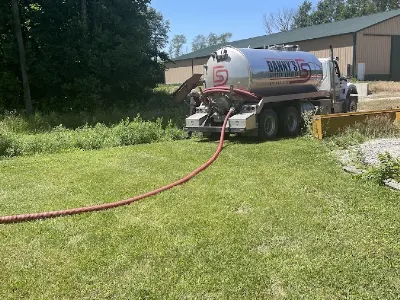
Danny's Septic Service

5.0 (292) Indianapolis, IN

Customers consistently praise this company for quick scheduling, courteous technicians, and clear explanations of problems and costs. Reviewers also appreciate fair, estimate-matching pricing and the crew's tidy cleanup after repairs.

  • Fast response
  • Clear communication
  • Fair pricing

Services:PumpingRiser InstallationRepairService

Contact See reviews Best in Indianapolis →

Keep It Clean Pumping Service

5.0 (68) Goshen, IN

Customers appreciate the staff's knowledge, friendly communication, and easy appointment scheduling, which make the process feel stress-free. Reviewers consistently say they would return and recommend the company to others.

  • Responsive scheduling
  • Friendly staff
  • Septic pumping

Services:PumpingService

Contact See reviews Best in Goshen →

Three Sons Sanitation

4.9 (284) Fort Wayne, IN

Customers consistently describe the crew as knowledgeable, courteous, and thorough, with technicians who arrive early and check the system carefully. Office staff are also praised for being easy to reach, and one customer appreciated that a live person answered when competitors did not.

  • Knowledgeable crew
  • Prompt office
  • Thorough inspections

Services:PumpingInspection

Contact See reviews Best in Fort Wayne →

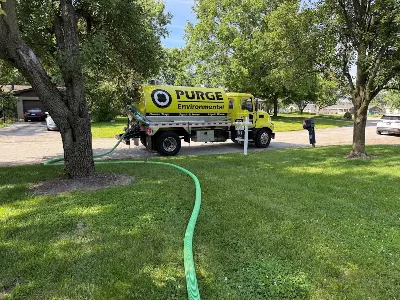
Purge Environmental

4.9 (209) Carmel, IN

Purge Environmental earns praise for punctual, same-day service and clear communication, including before-and-after photos and advice between visits. Customers also say their pricing is competitive and the crews are courteous.

  • Punctual
  • Same-day service
  • Clear communication

Services:PumpingCleaningService

Contact See reviews Best in Carmel →

Indiana Septic Tank Laws & Requirements

Septic work in Indiana follows a state rule, but the day-to-day process is run by your county. The following sections explain the statewide framework, what it requires, and the code that applies to residential systems.

Who regulates it Indiana Department of Health (IDOH), Onsite Sewage Systems Program, with county and local health departments

IDOH sets the statewide residential septic rule, 410 IAC 6-8.3. County health departments issue permits, inspect installations and run local installer registration. The rules for contractors and for inspections at sale vary a lot by county, so check with your county health department before you buy, sell, repair or install.

1

Indiana Septic Tank Laws

The Indiana Department of Health (IDOH), through its Onsite Sewage Systems Program, sets the statewide rule for residential septic systems under 410 IAC 6-8.3. The same program lists 410 IAC 6-10.1 for commercial systems. The rule covers septic tanks with soil absorption fields, sanitary vault privies and sewage holding tanks, while residential discharging systems fall under a separate IDEM permit. Local health departments carry out the rule, so the details you deal with depend on where your home is.

2

Indiana Septic Tank Requirements

Under the state framework, a septic permit is generally needed before construction, before adding bedrooms, before placing a mobile home and before installation or repair work. Many counties require a soil evaluation to size the absorption field, and some require a registered soil scientist to set the soil-loading rate. Separation distances also apply: the tank and absorption system must sit at least 50 feet from a private water supply well and 200 feet from a public water supply well, lake or reservoir.

3

Indiana Septic Code

The Indiana septic code in 410 IAC 6-8.3 sets the design, setback and installation standards that county health departments enforce. A March 2026 amendment to Section 57 updated distances from ponds, lakes, stormwater detention areas, rivers, streams and ditches. Sewers must also stay at least 50 feet from a water supply well, with limited exceptions. Because counties add their own procedures, confirm the current requirements with your local health department before any work begins.

Key rules at a glance (10), with official sources
TopicRuleSource
Who regulatesIDOH's Onsite Sewage Systems Program lists 410 IAC 6-8.3 (residential) and 410 IAC 6-10.1 (commercial) as the governing rules. It says local health departments issue more than 15,000 permits a year for new systems and about 6,000 for repairs, across more than 800,000 systems statewide.secure.in.gov
Scope of the rule410 IAC 6-8.3 covers a septic tank with soil absorption field, a sanitary vault privy, or a sewage holding tank. It does not cover residential discharging systems, which need an NPDES general permit from IDEM.iar.iga.in.gov
When a permit is neededCounty health departments require a septic permit before construction, before adding bedrooms, before placing a mobile home, and before any installation or repair. Greene County is an example, and other counties say the same.co.greene.in.us
Soil evaluation and designHoward County says a soil test is needed in all cases to size the absorption field. Hamilton County says a Registered Soil Scientist sets the soil-loading rate.in.gov
Permit validity (example)In Marshall County a septic permit is good for two years. Permit procedures and fees differ by county.in.gov
Setbacks (wells)Table I of 410 IAC 6-8.3-57 requires the septic tank and the soil absorption system to be at least 50 feet from a private water supply well and 100 feet from a commercial well. The distance is 200 feet from a public water supply well, lake or reservoir.law.cornell.edu
Setbacks (water bodies and sewers)A March 2026 IDOH amendment to Section 57 lists 50 feet from other ponds or lakes, 25 feet from stormwater detention areas and 25 feet from rivers, streams, ditches or drainage tile. Sewers must be at least 50 feet from a water supply well, with limited exceptions. I did not find the property-line and building setback figures in the sources I retrieved.iar.iga.in.gov
Inspection at property saleI found no official statewide rule requiring a septic inspection at sale. St. Joseph County requires one only for properties in the St. Joseph Aquifer System that have not transferred or had a new system installed in the last 15 years, under ordinance changes effective July 1, 2024. Other counties may have their own rules, and one real-estate blog says Brown County requires an inspection at every eligible sale; I did not check that against an official county source.in.gov
Seller disclosureIndiana law (IC 32-21-5) generally requires sellers of 1-4 unit residential property to complete the state sales disclosure form. The form has septic field/bed and septic/holding tank items.forms.in.gov
Pumping and maintenanceI found no statewide required pumping interval for homeowners in the official sources. A copy of the rule hosted by La Porte County shows operating permits that require periodic inspections, at least every 3 years for systems with components other than a septic tank and at least every 5 years for others, but the text is truncated and I could not confirm which systems it applies to. One aggregator site says a licensed septic tank cleaner must pump all tanks, but I did not verify the licensing authority.in.gov

Official sources:IDOH Onsite Sewage Systems ProgramIDOH Onsite Sewage Systems Program (statistics)IDOH 2026 rule interpretation, 410 IAC 6-8.3 scope410 IAC 6-8.3-57 Separation distances (Cornell LII)410 IAC 6-8.3-57 amendment, Indiana Register (March 2026)La Porte County: copy of 410 IAC 6-8.3

Rules change and some counties add their own. Check with your county health department before you start work.

Septic Tank permits and licenses in Indiana

A septic permit is issued by your county health department, not the state, and it is typically needed before a building permit is approved. You usually submit an application and fee along with a soil evaluation and a system design, after which the health department inspects the installation. Permit validity and fees vary by county; in Marshall County, for example, a permit is good for two years. Repairs or replacement of a major component can also require a permit in some counties, so check first.

How much does septic tank pumping cost in Indiana?

Typical septic work in Indiana is priced somewhat below national averages. Routine tank pumping runs $275 to $525 statewide, compared with $290 to $565 nationally, with a state average of about $400. Installation averages around $7,000 in Indiana, against a national average of about $7,500, and replacement averages roughly $6,065 versus $6,500 nationally. Drain field work averages about $7,465 in the state, compared with $8,000 nationally, so budgeting from state ranges is a sound starting point.

ServiceIn IndianaNational
Septic Tank Pumping Cost $275 – $525 $290 – $565 -7%
Septic Tank Installation Cost $3,265 – $11,200 $3,500 – $12,000 -7%
Septic Tank Maintenance $280 – $465 $300 – $500 -6%
Septic Tank Inspection $185 – $840 $200 – $900 -6%
Septic Tank Replacement Cost $2,800 – $9,335 $3,000 – $10,000 -7%
Septic Tank Cost $270 – $525 $290 – $565 -7%
Septic Tank Cleaning Cost $280 – $655 $300 – $700 -7%
Septic Tank Repair Cost $605 – $2,800 $650 – $3,000 -7%
Drain Field $2,800 – $14,000 $3,000 – $15,000 -7%
Aerobic Septic System $185 – $560 $200 – $600 -6%

Typical ranges: national prices adjusted to the cost of living in Indiana (BEA regional price parities). Your quote depends on your property.

Use the cost calculator

Septic Tank services in Indiana: FAQ

Do I need a septic permit in Indiana?

Yes, in most cases. A septic permit is generally required before new construction, before adding bedrooms, before placing a mobile home, and before any installation or repair. Apply through your county health department, which handles permits, fees and inspections.

Is there a septic license in Indiana?

There is no single statewide septic installer license. Installers register or are licensed county by county, and some counties accept IOWPA certification. Check your county health department to see what applies where you live.

How much does septic tank pumping cost in Indiana?

Pumping typically ranges from $275 to $525 across the state, with an average near $400. Prices vary with tank size, access and local providers, so get a quote before scheduling.

Get free quotes