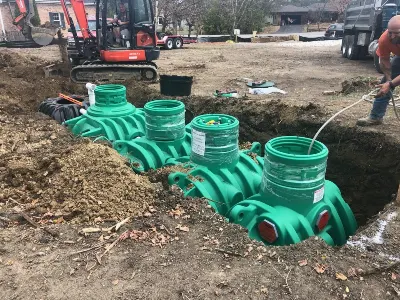
| Who regulates | IDPH regulates installation of private sewage systems with no surface discharge (such as septic tanks and seepage fields) and of systems discharging up to 1,500 gallons per day to the ground surface, and it reviews plans before construction. | dph.illinois.gov |
| Local health departments | About 90 local health agencies review sewage system plans, either under a local ordinance or as an agent of IDPH, and local programs must be at least as stringent as the state Code. | idph.illinois.gov |
| Local rules can be stricter | Some municipalities amend the state Code; for example, South Barrington's code deletes some state options (such as certain sand filters) and does not permit effluent discharges. | codelibrary.amlegal.com |
| Permit before work | Construction or installation must not begin until a permit is requested and approved, and a request is submitted in writing to IDPH or its local agent. | ilga.gov |
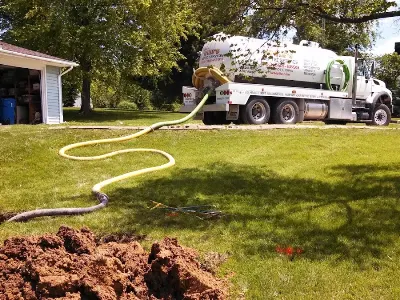
| Contractor licensing | Anyone who constructs, installs, repairs, modifies or maintains a private sewage system, or pumps or hauls its waste, must be licensed by IDPH as an installation or pumping contractor, except for work on a system serving their own single-family residence. | ilga.gov |
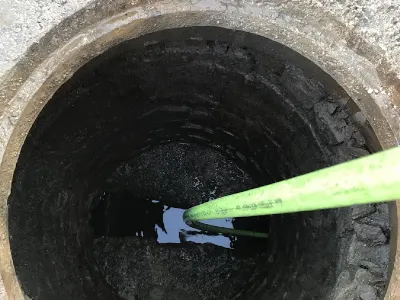
| Maintenance and evaluation (residential) | For systems permitted after January 1, 2014, a residential septic tank must be evaluated before or within 3 years of installation and then at least once every 5 years, and the tank must be pumped if scum and settled solids exceed 33% of its liquid capacity. | ilga.gov |
| Maintenance (non-residential and ATU) | Non-residential septic tanks must be evaluated within 3 years of installation and then at least every 3 years, and a county permit form states that aerobic treatment units must be evaluated and serviced at least every 6 months. | health.kanecountyil.gov |
| Who may evaluate | The homeowner may evaluate a residential system, as may an installation contractor, a licensed Environmental Health Practitioner, an Illinois Professional Engineer, or an IDPH or local health department representative. | ilga.gov |
| Alternative maintenance interval | An owner may ask IDPH to approve an alternative maintenance interval, which is decided case by case and is not transferable from owner to owner. | idph.state.il.us |
| Inspection at property sale | I found no statewide requirement for a septic inspection at sale; some counties or lenders require one, and Ogle County says its evaluations are not required by the Health Department. | oglecountyil.gov |
| Seller disclosure | University of Illinois Extension says real estate law requires a residential seller to certify whether they know of any problems with the on-site system. | web.extension.illinois.edu |
| Setbacks | The Code requires system components to meet the distances in Appendix A, Illustration D, but I could not retrieve the official figures; secondary sources report 50 feet from a private well, which should be confirmed with your health department. | ilga.gov |
| Site and area protection | A system must not be located where surface water accumulates, and the area reserved for the seepage system must be protected from traffic, compaction, and soil removal or addition during construction. | ilga.gov |
| Water line separation | Sewers must be at least 10 feet horizontally from a water line, or closer only if the sewer crown is at least 18 inches below the water line invert. | regulations.justia.com |
| Abandoned tanks | Unused septic tanks must be completely pumped, their floor and walls cracked or crumbled so they cannot hold water, and then filled with sand or soil. | ilga.gov |
| Repairs | When an existing system is repaired or replaced, the repaired or replaced portion must comply with all requirements of Part 905. | law.cornell.edu |