| Who regulates | <cite index="1-8">The county adopts a sanitary code, issues permits, and may inspect construction.</cite> | bookstore.ksre.ksu.edu |
| Statewide baseline | <cite index="35-8">A county code can be more restrictive than Bulletin 4-2 but cannot be less restrictive</cite>, according to Ford County's summary. <cite index="10-5">Between 1990 and 2012, 103 counties adopted sanitary codes meeting Bulletin 4-2 standards.</cite> | kslepp.org |
| Minimum tank size | <cite index="30-9">The minimum septic tank capacity is two times the daily flow at 150 gallons per bedroom, or 1,000 gallons, whichever is larger.</cite> | kdhe.ks.gov |
| Setbacks (tank) | <cite index="33-10,33-11">Tanks should never be closer than 50 feet to any source of water, and a tank should not be closer than 10 feet to any building or be sited in the 100-year flood plain.</cite> <cite index="34-6">100 feet is required if the water source serves a public water supply.</cite> | kdhe.ks.gov |
| Setbacks (county examples) | Counties can set their own distances. Leavenworth County's resale inspection form lists <cite index="25-3">minimums of 50 ft from a pond, stream, cistern or water main, 25 ft from a water service line, 100 ft from a well, and 100 ft from a regulatory floodway.</cite> | files.leavenworthcounty.gov |
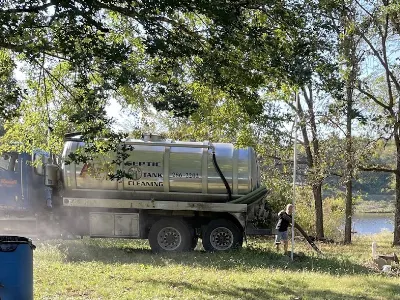
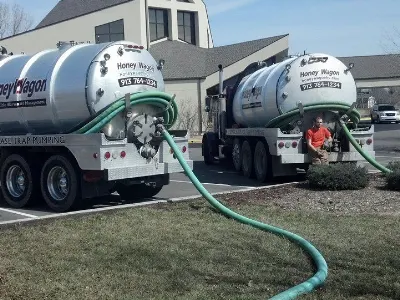
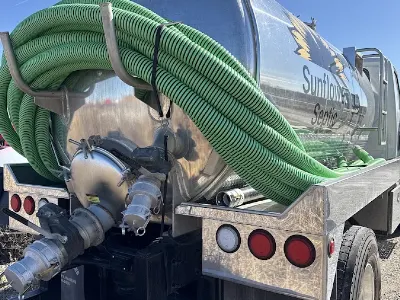
| Pumping and maintenance | <cite index="37-8">KDHE's homeowner guide gives a rule of thumb of pumping by a licensed pumper every three to five years.</cite> <cite index="31-9">KDHE's maintenance guidance says a tank at the minimum 1,000-gallon size should be pumped about every 1.5 years in the high-use scenario shown in its table.</cite> I found no statewide mandatory pumping schedule in the sources. | kdhe.ks.gov |
| Inspection at property sale | I found no statewide Kansas statute or KDHE rule requiring a septic inspection at sale. <cite index="28-6">One summary says none was found.</cite> Some counties do require one. <cite index="22-2">Harvey County's code requires the sewer system and water wells to be inspected for compliance before a sale that includes a dwelling is complete.</cite> | harveycounty.gov |
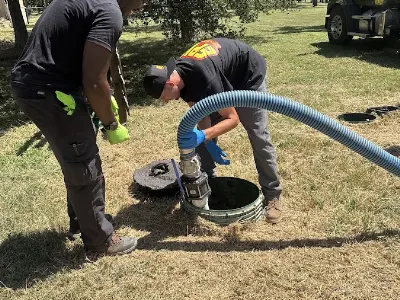
| Johnson County resale rule | <cite index="21-9">Johnson County's code makes it the owner's duty to uncover and pump the septic or holding tank before or at the time of a resale inspection.</cite> | opkansas.civicweb.net |
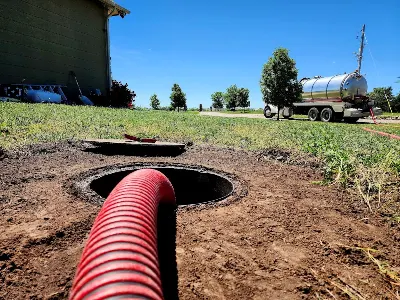
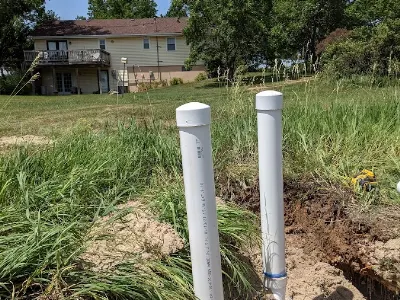
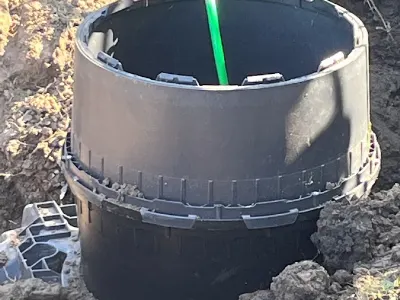
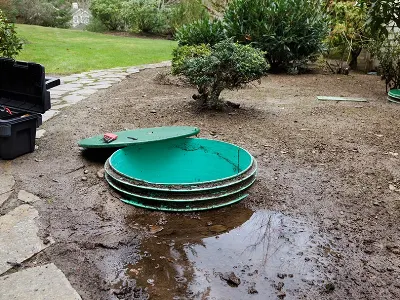
| Johnson County tank riser | <cite index="12-2">In Johnson County, all new septic tank installs require a riser from the tank to surface grade with a lockable lid.</cite> | missionks.org |
| Surface-discharging systems | <cite index="11-11">A surface-discharging system must be permitted by KDHE under K.S.A. 65-165.</cite> Under the Sedgwick County code, a discharge to the ground surface is prohibited unless KDHE permits it. | sedgwickcounty.org |
| Funding for failing systems | <cite index="10-8,10-9">KDHE's Watershed Management Section has created grants that counties with many low-income homeowners can apply for. Counties would use the money to repair or replace failing onsite systems and to test private wells.</cite> | kslepp.org |