Septic Tank Services in Utah
The best-rated septic service companies across Utah, plus state laws, permits and costs.
Finding a reliable septic tank service in Utah starts with knowing who to hire and what the rules require. This page lists highly rated local companies, explains the state's onsite wastewater laws and permits, and shows typical costs so you can plan a pumping, repair or installation project with fewer surprises.
37 cities40 companiesavg. 4.7★
Top 10 septic service companies in Utah
The companies below are among the best-reviewed septic providers in the state, with ratings and review counts shown for each.
Show map
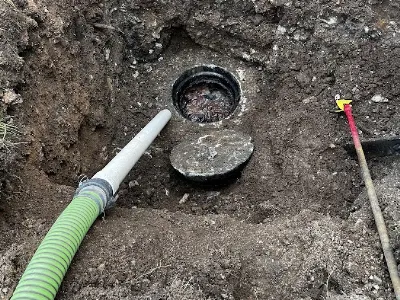
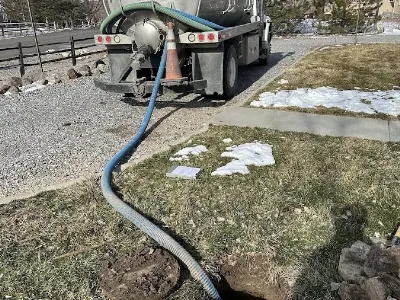
Customers consistently praise the team's responsiveness, knowledge, and willingness to explain how septic systems work, even when a job falls outside their service area. Long-term clients say they keep returning for maintenance and urgent problems, and the company is also noted for quick help by phone.
- Responsive staff
- Knowledgeable technicians
- Long-term maintenance
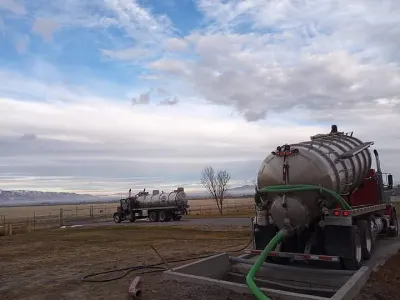
Customers appreciate the crew's punctuality, friendly manner, and willingness to explain the work, including after-hours pumping and RV tank emptying. Reviewers consistently describe the service as quick, thorough, and professional.
- After-hours service
- Friendly technicians
- Quick turnaround
Services:PumpingCleaningInstallationService
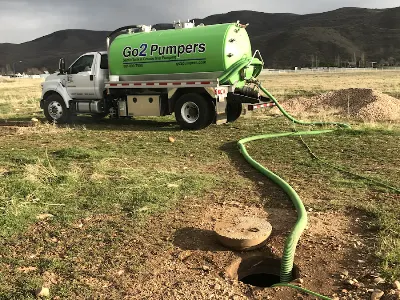
Customers consistently praise the quick scheduling, punctual arrivals, and friendly, knowledgeable staff. Reviewers also appreciate the clean work and the practical tips they receive about tank care and when to service it again.
- Fast scheduling
- Friendly staff
- Commercial tanks
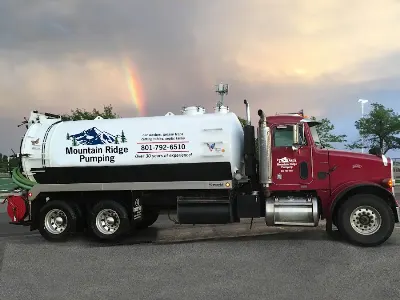
Customers appreciate the technician's punctuality, flexibility with scheduling, and helpful advice on how often tanks should be pumped. Many describe him as their regular go-to for recurring holding tank and septic pumping.
- Septic pumping
- Same-day service
- Scheduling flexibility
Services:Pumping
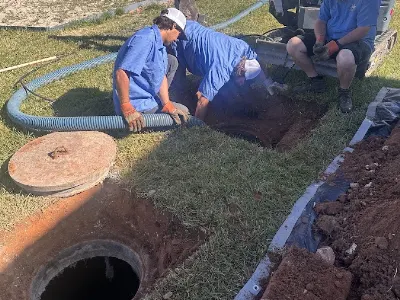
Customers appreciate the family-run team for prompt, friendly service, clear guidance on when pumping is actually needed, and thorough explanations during inspections. Several reviewers mention being helped through their first septic purchase or emergency with patience and quick scheduling.
- Family owned
- Honest advice
- Emergency service
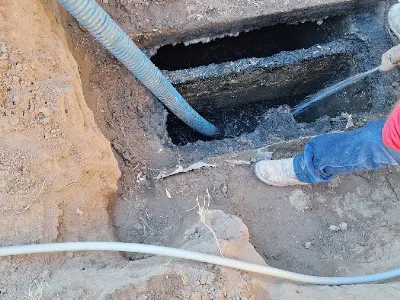
Customers appreciate punctual, friendly technicians who do thorough pumping and offer useful maintenance tips. One reviewer complained of unanswered phone calls and no response to a follow-up post.
- Septic pumping
- Punctual
- Maintenance tips
Services:PumpingServiceMaintenance
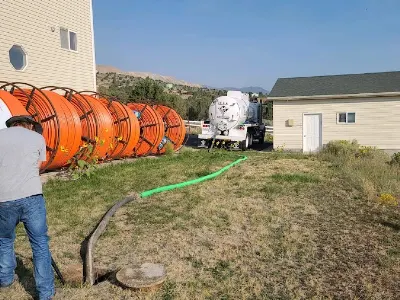
Customers consistently praise the team's responsiveness, including emergency and holiday calls, and their clear explanations of septic problems. Many describe them as honest, thorough, and reliable enough to recommend without reservations.
- Emergency service
- Clear explanations
- Tank replacement
Services:PumpingReplacementDrain Field ServicesServiceCleaningInspection
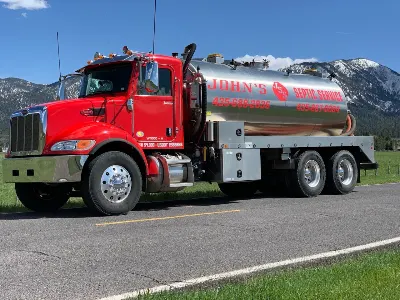
Reviewers praise the company for punctual crews, friendly and professional staff, and transparent pricing without the surcharges they have encountered elsewhere. Some customers also appreciate the helpful tips on locating and maintaining their tanks.
- Transparent pricing
- Punctual
- Friendly crew
Septic Service Companies by city in Utah
Septic providers are spread across Utah, from the Wasatch Front to Southern Utah. Pick a company in your area to compare service areas and availability.
Utah Septic Tank Laws & Requirements
Utah septic systems follow a single state administrative code, enforced by state and local health agencies. Knowing the basics helps you avoid costly violations during a sale, a remodel or a new build.
Utah septic systems are governed by Utah Administrative Code R317-4 (Onsite Wastewater Systems), which the Division of Water Quality administers. Local county health departments review and permit most systems, and the system must be designed by a state-certified professional (R317-11). Specific fees, inspection practices and any sale-time inspection rules vary by county, and I did not find an official statewide point-of-sale inspection requirement.
Utah Septic Tank Laws
Utah septic systems are governed by Utah Administrative Code R317-4, which covers onsite wastewater systems. The Utah Department of Environmental Quality, Division of Water Quality administers the rule, while local county health departments handle most day-to-day review and permitting. Systems must be designed by a state-certified professional under R317-11, and specific fees and inspection practices can vary by county, so check with the health department that covers your property.
Utah Septic Tank Requirements
Requirements include a soil evaluation and, where needed, a percolation test performed by a certified tester. Each septic tank must be approved by the state for its burial depth and cover load and must pass a water-tightness test before backfilling. Setbacks apply: an absorption system must stay at least 100 feet from an ungrouted well or spring, and at least 10 feet from any property line. Every property with an onsite system also needs a replacement area sized for full absorption-system replacement.
Utah Septic Code
The septic code in R317-4 sets operation and maintenance expectations. Conventional systems should be assessed after the first year of operation and then at set intervals, while alternative systems such as mound, pressure distribution and holding tanks follow annual or semi-annual inspection schedules. Anyone who designs, inspects or maintains these systems must hold the right Onsite Systems Professional certification, which the Division of Water Quality issues.
Key rules at a glance (10), with official sources
| Topic | Rule | Source |
|---|---|---|
| Who regulates | The rule is R317-4, and 'regulatory authority' means either the Utah Division of Water Quality or the local health department having jurisdiction. | utrules.elaws.us |
| Permit scope (Salt Lake County example) | Salt Lake County permits onsite systems with domestic flow of 5,000 gallons per day or less, while the state DEQ permits projects above 5,000 gallons per day or with non-domestic flows. | prod.saltlakecounty.gov |
| Certified professional required | Under R317-11, anyone who designs, inspects or maintains septic systems, or conducts percolation tests or soil evaluations, must hold Onsite Systems Professional certification, and a Level 2 professional can design conventional systems. | deq.utah.gov |
| Perc test / soil evaluation | Summit County Health Department requires an onsite soil evaluation and percolation test, a certified tester must do the test, and the department attends it (absorption must be no faster than 1 inch per minute or slower than 1 inch per hour). | health.summitcounty.org |
| Setback: wells | Under R317-4-13 Table 2, an absorption system within 200 feet of an ungrouted individual well or spring needs a special report, and approval is never allowed closer than 100 feet to an ungrouted well or spring (a grouted well needs a minimum 30-foot grout seal). | law.cornell.edu |
| Setback: property lines | The horizontal setback from an absorption system to any property line is a minimum of 10 feet, and for at-grade systems the toe of the final cover must be at least 5 feet from the line. | uwrl.usu.edu |
| Replacement area | Any property that uses an onsite wastewater system must have a replacement area, sized for 100% replacement of the absorption system and meeting the same setbacks. | uwrl.usu.edu |
| Tank approval and testing | Each septic tank must be approved by the division for its proposed burial depth and cover load, and must be tested for water tightness before backfilling. | uwrl.usu.edu |
| Approved tanks list | The DEQ Onsite Wastewater Program page links a list of approved septic tanks and their manufacturers. | deq.utah.gov |
| Maintenance and inspection | R317-4-11 says conventional systems should be assessed after the first year of operation and then at minimum frequencies in a table; alternative systems like mound, pressure distribution and holding tanks have annual or semi-annual inspections in Table 7.1; I found no official statewide mandatory pumping interval, and the 3-to-5-year figure comes from non-official sources. | law.cornell.edu |
Official sources:Utah DEQ - Onsite Wastewater ProgramUtah DEQ - Water Quality CertificationUtah Admin. Code R317-4 (elaws)R317-4-13 Tables (Cornell LII)R317-4-11 Operation and Maintenance (Cornell LII)R317-4 reader-friendly version (USU, not official)
Rules change and some counties add their own. Check with your county health department before you start work.
Septic Tank permits and licenses in Utah
Septic permits in Utah are issued by the county health department with jurisdiction, not by a single statewide office. The process usually includes a feasibility review, a soil evaluation, a percolation test where required and a system design prepared by a certified professional. Salt Lake County, for example, permits onsite systems with domestic flow of 5,000 gallons per day or less, while larger or non-domestic projects go to the state. Some counties require a septic permit before a building permit can be issued, so confirm the sequence early. Fees and timelines are set locally, so contact your county health department before starting work.
How much does septic tank pumping cost in Utah?
In Utah, septic tank pumping typically runs $290 to $560, with an average of about $425, close to the national range of $290 to $565. Installation averages around $7,415 in Utah compared with about $7,500 nationally, and replacement averages $6,425 versus roughly $6,500 nationally. Repairs in the state average about $1,830, and inspections average around $545. Prices are very close to national figures, so local competition and system type will matter more than state location.
| Service | In Utah | National | |
|---|---|---|---|
| Septic Tank Pumping Cost | $290 – $560 | $290 – $565 | -1% |
| Septic Tank Installation Cost | $3,460 – $11,865 | $3,500 – $12,000 | -1% |
| Septic Tank Maintenance | $295 – $495 | $300 – $500 | -1% |
| Septic Tank Inspection | $200 – $890 | $200 – $900 | -1% |
| Septic Tank Replacement Cost | $2,965 – $9,885 | $3,000 – $10,000 | -1% |
| Septic Tank Cost | $285 – $560 | $290 – $565 | -1% |
| Septic Tank Cleaning Cost | $295 – $690 | $300 – $700 | -1% |
| Septic Tank Repair Cost | $645 – $2,965 | $650 – $3,000 | -1% |
| Drain Field | $2,965 – $14,830 | $3,000 – $15,000 | -1% |
| Aerobic Septic System | $200 – $595 | $200 – $600 | -1% |
Typical ranges: national prices adjusted to the cost of living in Utah (BEA regional price parities). Your quote depends on your property.
Use the cost calculatorSeptic Tank services in Utah: FAQ
Do I need a septic tank permit in Utah?
Usually yes. Septic permits are issued by the county health department with jurisdiction over your property, after a soil evaluation and a system design by a certified professional. Some counties require the septic permit before a building permit, so check with the local health department first.
Do I need a septic license in Utah?
Utah certifies onsite professionals rather than issuing a separate license to every installer or pumper. Designers, inspectors and maintenance professionals need an Onsite Systems Professional certification under R317-11, which requires training, passing an exam through the Utah State University program and applying to the Division of Water Quality.
How much does septic tank pumping cost in Utah?
Septic tank pumping in Utah typically costs between $290 and $560, with an average near $425. Costs depend on tank size, access and local company rates, and the range is close to the national average.
Septic Service Companies in other states
AlabamaAlaskaArizonaArkansasCaliforniaColoradoConnecticutDelawareDistrict of ColumbiaFloridaGeorgiaHawaiiIdahoIllinoisIndianaIowaKansasKentuckyLouisianaMaineMarylandMassachusettsMichiganMinnesotaMississippiMissouriMontanaNebraskaNevadaNew HampshireNew JerseyNew MexicoNew YorkNorth CarolinaNorth DakotaOhioOklahomaOregonPennsylvaniaRhode IslandSouth CarolinaSouth DakotaTennesseeTexasVermontVirginiaWashingtonWest VirginiaWisconsinWyoming