Find your city

Type your city or ZIP code to see the best-rated septic service companies near you.

Get free quotes

Septic Tank Services in Louisiana

The best-rated septic service companies across Louisiana, plus state laws, permits and costs.

Looking for a septic tank Louisiana service? This page lists well-rated septic companies across the state, explains how onsite wastewater rules work, and shows typical prices for pumping, installation and repair. Louisiana septic work is overseen by the state Department of Health, so the rules below matter whether you are building, repairing or simply maintaining a system.

14 cities39 companiesavg. 4.7★

Top 10 septic service companies in Louisiana

The companies below are among the highest rated in Louisiana, with most scoring 4.8 or better. Ratings and review counts are shown so you can compare providers in the city closest to you.

Show map

Little Rooster Septic Service

5.0 (109) Baton Rouge, LA 24/7

Customers consistently praise the team for fast response, including same-day and emergency calls, and for clear explanations of what caused their problems. A few mention fair pricing and honest, professional work, though one noted the yard was left in poor condition after a job.

  • Emergency response
  • Fair pricing
  • Honest communication

Services:PumpingCleaningRepairServiceAerobic Septic System Service

Contact See reviews Best in Baton Rouge →

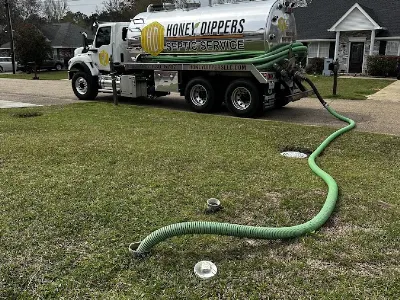
Honey Dippers Septic

4.9 (355) New Orleans, LA

Customers consistently praise the team's punctuality, professionalism, and clear communication, with several saying they would hire again. Many also appreciate the fair pricing and the way the crew explained the problem and what to watch for later.

  • Punctual
  • Professional
  • Clear communication

Services:PumpingService

Contact See reviews Best in New Orleans →

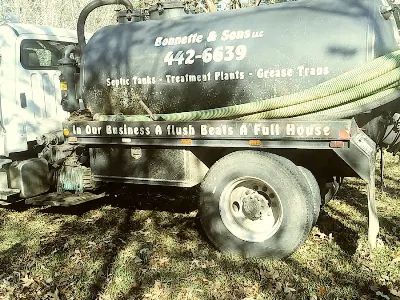
Bonnette & Sons

5.0 (14) Alexandria, LA

Customers consistently praise the crew for being prompt, knowledgeable, and fair on price, with one owner personally coming out to diagnose a building odor problem the same day. Several reviewers mention going beyond the basic job, such as clearing root growth and digging out a blocked ditch.

  • Fair pricing
  • Prompt response
  • Knowledgeable crew

Services:PumpingRepairServiceMaintenanceDrain Field Services

Contact See reviews Best in Alexandria →

Septic Service Companies by city in Louisiana

Septic providers are spread across cities including Bossier City, Baton Rouge, New Orleans, Houma and Alexandria, so service options vary by region.

Louisiana Septic Tank Laws & Requirements

Septic systems in Louisiana are governed by state health rules, and the permitting work runs through local parish offices. Knowing the basic framework helps you avoid costly delays before any digging starts.

Who regulates it Louisiana Department of Health (LDH), Office of Public Health – Onsite Wastewater Program (permits issued through parish health units)

LDH's Onsite Wastewater Program licenses and regulates installers, haulers, sub-manufacturers and manufacturers of onsite systems, and sanitarians in each parish health unit run the permitting system. The governing rules are in the Louisiana Sanitary Code, Title 51, Part XIII. 57 of the 64 parishes have also enacted their own onsite sewage ordinances, so check local rules too.

1

Louisiana Septic Tank Laws

Louisiana septic tank work is regulated by the Louisiana Department of Health (LDH), Office of Public Health, through its Onsite Wastewater Program. Under the state Sanitary Code, Title 51, Part XIII, no one may install, alter or operate an individual sewerage system without first obtaining a permit. A septic tank may be used only where a community sewer system is not available, and a septic tank alone is not an acceptable treatment system; it must be followed by secondary treatment. Many parishes also enforce their own onsite sewage ordinances, so check local rules as well.

2

Louisiana Septic Tank Requirements

Several practical requirements apply to most projects. The property owner is the person who applies for the permit, and the temporary permit is released only to the owner. A non-mechanical septic tank system must be inspected by an LDH sanitarian before any part of it is covered. The installer must submit certification within 15 days after installation is complete, and a final permit is then issued to the owner. Any system installed without the state Sewage Identification Tag cannot be approved, and tags are not transferable. Setbacks also apply, including a 50 foot distance from water wells for septic tanks and 100 feet for mechanical plants.

3

Louisiana Septic Code

The Louisiana Sanitary Code sets the technical standards for onsite systems. Mechanical or aerobic plants may be permitted where a conventional septic system cannot be, and they must meet the National Sanitation Foundation standard. Discharging septic tank effluent into street gutters, surface ditches or streams is prohibited. LDH recommends septic tanks be inspected about every six years and pumped roughly every eight years, though more frequent service may be needed. For mechanical plants, manufacturers or installers must provide a minimum two-year service policy that includes four inspection visits.

Key rules at a glance (15), with official sources
TopicRuleSource
Who regulates<cite index="8-3">Parish health unit sanitarians operate the permitting system for onsite sewage treatment</cite>, under state rules in LAC Title 51, Part XIII (Sewage Disposal).ldh.la.gov
Permit required<cite index="3-3">No one may install, alter after installation, or operate an individual sewerage system of any kind without first getting a permit from the state health officer.</cite>ldh.la.gov
Septic only where no community sewer<cite index="11-8">A septic tank system may be used only where a community-type sewerage system is not available</cite>, and the other code requirements must be met.law.cornell.edu
Secondary treatment<cite index="29-4">LDH's homeowner packet says a septic tank alone is not an acceptable treatment system and must be followed by secondary treatment.</cite>ldh.la.gov
Who applies<cite index="1-2,1-4">The property owner must be the person who applies for the permit, and the temporary permit is released only to the owner.</cite>ldh.la.gov
Installation inspection and final permit<cite index="29-10">A non-mechanical septic tank system must be inspected by an Office of Public Health sanitarian before any part of it is covered.</cite> <cite index="3-6">The installer's certification must be submitted within 15 days after installation is complete</cite>, and <cite index="3-7">a final permit is then issued to the owner/occupant.</cite>ldh.la.gov
Identification tag<cite index="2-6">Any individual sewerage system installed in Louisiana without the state Sewage Identification Tag cannot be approved, and tags are not transferable.</cite>ldh.la.gov
Approved systems<cite index="37-4">An individual mechanical (aerobic) plant is permitted in place of a conventional septic tank system where a conventional system could not be permitted.</cite> <cite index="37-5">Permitted mechanical plants must comply with the National Sanitation Foundation standard.</cite> I found no single official statewide list of approved tank brands in these searches; the LDH Onsite Wastewater Program page is the place to ask.ldh.la.gov
Setbacks<cite index="12-8">A DEQ/LDH training document lists a 50 ft setback from water wells for septic tanks and 100 ft for mechanical plants and oxidation ponds, and a 50 ft setback from reservoirs</cite>, citing LAC 51 Part XIII §701.D. <cite index="14-10,14-11">The tank location must also meet the minimum distances from water wells and water lines in Part XII of the Sanitary Code.</cite> I did not confirm other setbacks, such as property lines, in an official source.deq.louisiana.gov
Effluent discharge<cite index="15-11">Discharging septic tank effluent into street gutters, surface ditches, or streams is prohibited.</cite>law.cornell.edu
Pumping/maintenance (septic tanks)<cite index="29-3">LDH's homeowner packet says septic tanks should be inspected every 6 years and pumped out every 8 years, though more often may be needed.</cite> This is a recommendation, not a stated legal mandate.ldh.la.gov
Mechanical plant service contract<cite index="35-4">Manufacturers, sub-manufacturers or installers must give the buyer of each residential mechanical plant a minimum two-year service policy, and the initial policy must include four inspection/service visits.</cite> <cite index="36-1">Homeowners who maintain their own mechanical plant must submit a notarized affidavit and maintenance/service check reports every six months.</cite>ldh.la.gov
Inspection at property saleI found no official LDH source requiring a septic inspection at property sale. <cite index="30-7">A secondary source says there is no statewide requirement, but some parishes and lenders impose their own.</cite> Confirm with your parish health unit.louisianaplumbingauthority.com
Plumber license is not an installer license<cite index="23-1,23-2">Individual sewage treatment systems may be installed only by individuals licensed through Louisiana's Office of Public Health, and an installer's license is not the same as a plumber's or contractor's license.</cite>ldh.la.gov
Local/state statistics<cite index="8-5">As of August 2023, 475,299 onsite wastewater treatment systems had been permitted in Louisiana.</cite>ldh.la.gov

Official sources:LDH Onsite Wastewater ProgramLAC Title 51 Part XIII – Installer Workshop Study Material (Sanitary Code text)LDH Application Packet for Septic Tanks with Secondary TreatmentLDH Application Packet (installer license note)LDH Sewerage Treatment Plant Identification Tag FAQLDH Regulations Regarding Mechanical or Aerobic Wastewater Treatment Systems

Rules change and some counties add their own. Check with your county health department before you start work.

Septic Tank permits and licenses in Louisiana

Permits for a septic system in Louisiana are requested from your parish health unit, which handles the Onsite Wastewater Program locally. The property owner applies, submits plans, and may receive a temporary permit once plans are approved. A final permit follows the sanitarian's inspection and the installer's certification, which is due within 15 days of completion. The state identification tag is also required before approval. Fees and processing times vary, so confirm current requirements directly with your parish office before scheduling work.

How much does septic tank pumping cost in Louisiana?

Septic costs in Louisiana run slightly below national averages in most categories. Pumping typically ranges from $260 to $500 in the state, with an average of $380, compared with $290 to $565 nationally. Installation averages $6,615 in Louisiana versus $7,500 nationally, and replacement averages $5,735 compared with $6,500. Repairs average $1,630 in the state against $1,850 nationally. Drain field work, one of the bigger projects, averages $7,055 locally compared with $8,000 across the country.

ServiceIn LouisianaNational
Septic Tank Pumping Cost $260 – $500 $290 – $565 -12%
Septic Tank Installation Cost $3,085 – $10,585 $3,500 – $12,000 -12%
Septic Tank Maintenance $265 – $440 $300 – $500 -11%
Septic Tank Inspection $175 – $795 $200 – $900 -12%
Septic Tank Replacement Cost $2,645 – $8,820 $3,000 – $10,000 -12%
Septic Tank Cost $255 – $500 $290 – $565 -12%
Septic Tank Cleaning Cost $265 – $615 $300 – $700 -12%
Septic Tank Repair Cost $575 – $2,645 $650 – $3,000 -12%
Drain Field $2,645 – $13,230 $3,000 – $15,000 -12%
Aerobic Septic System $175 – $530 $200 – $600 -11%

Typical ranges: national prices adjusted to the cost of living in Louisiana (BEA regional price parities). Your quote depends on your property.

Use the cost calculator

Septic Tank services in Louisiana: FAQ

Do I need a septic tank permit in Louisiana?

Yes. No one may install, alter or operate an individual sewerage system in Louisiana without a permit from the state health officer. Apply through your parish health unit, and the property owner is the applicant.

Do I need a special license to install a septic system in Louisiana?

Yes. Individual sewage treatment systems must be installed by an installer licensed through LDH's Onsite Wastewater Program. A plumber's or contractor's license does not substitute for this installer license.

Who issues septic licenses in Louisiana?

The Louisiana Department of Health, Office of Public Health, through its Onsite Wastewater Program issues the licenses. Applications are available from the nearest parish health unit.

Get free quotes