Find your city

Type your city or ZIP code to see the best-rated septic service companies near you.

Get free quotes

Septic Tank Services in Massachusetts

The best-rated septic service companies across Massachusetts, plus state laws, permits and costs.

Finding septic tank services in Massachusetts means dealing with a mix of state rules and local requirements. The state sets the baseline under Title 5, while your town's Board of Health often adds its own licensing and permit steps. This page covers the companies with strong ratings across the state, the rules that apply to septic systems, the permit and license process, and what typical work costs compared with national averages.

50 cities86 companiesavg. 4.8★

Top 10 septic service companies in Massachusetts

The companies below have the highest ratings in the directory, with 4.9 to 5 stars. Review counts vary widely, so a high rating with many reviews gives more confidence than a perfect score with only a few.

Show map

Linton Septic

5.0 (99) Chicopee, MA

Customers, many of them long-term, value the courteous and professional crews, quick scheduling, and fair pricing. Several mention that the team locates buried tanks with ease and leaves the yard in good condition afterward.

  • Tank pumping
  • Reliable scheduling
  • Fair pricing

Services:Pumping

Contact See reviews Best in Chicopee →

Home Town Pumping

4.9 (366) Attleboro, MA

Reviewers appreciate fast scheduling, knowledgeable technicians who take time to answer questions, and fair pricing. Several describe the company as a dependable long-term choice for both residential and commercial holding tank work, including emergency calls.

  • Reliable scheduling
  • Knowledgeable staff
  • Fair pricing

Services:PumpingServiceRepair

Contact See reviews Best in Attleboro →

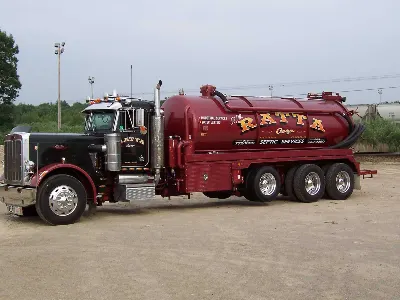
R M Ratta Corp

4.9 (204) Fitchburg, MA 24/7

Customers consistently praise the team's knowledge, punctual arrivals, and reasonable pricing, especially for emergency calls where they quickly diagnosed and fixed the problem. One reviewer raised a concern about a driver's unsafe driving on the road.

  • Emergency response
  • Fair pricing
  • Septic pumping

Services:PumpingInstallationService

Contact See reviews Best in Fitchburg →

Septic Services LLC

5.0 (54) Taunton, MA 24/7

Customers often call this company for urgent problems or troubleshooting, and they appreciate how quickly the team responds and how well it diagnoses issues. Many reviewers single out individual technicians for being knowledgeable, honest, and fairly priced.

  • Urgent response
  • Honest pricing
  • Problem diagnosis

Services:PumpingServiceInspection

Contact See reviews Best in Taunton →

Lafond Septic Services

4.9 (139) Westfield, MA

Customers describe the crew as friendly, punctual, and tidy, with easy phone contact and flexible scheduling when a pumping is urgent. Pricing is repeatedly described as reasonable, and many reviewers have used the company for years.

  • Flexible scheduling
  • Tidy work
  • Reasonable pricing

Services:PumpingService

Contact See reviews Best in Westfield →

Rosano Davis Sanitary Pumping Inc

4.9 (121) Boston, MA 24/7

Customers consistently highlight fast phone answering, including on weekends and during storms, and courteous, knowledgeable technicians who explain the work. Several reviewers also say the crews restored properties carefully after inspections and handled repairs and pumping on tight schedules.

  • 24/7 response
  • Emergency pumping
  • Title 5 inspections

Services:PumpingInspectionRepairService

Contact See reviews Best in Boston →

Massachusetts Septic Tank Laws & Requirements

Massachusetts septic work is governed by a state regulation and enforced locally. The rules below set out who regulates, what must be inspected and when, and where systems can be placed.

Who regulates it Massachusetts Department of Environmental Protection (MassDEP), which administers Title 5 (310 CMR 15.000). Local Boards of Health are the primary regulators.

<cite index='46-1'>MassDEP administers Title 5, the state septic regulation.</cite> <cite index='28-1,28-5'>Local Boards of Health are the primary regulatory authorities. MassDEP is involved in certain approvals, such as many innovative/alternative technology approvals, shared systems, large systems and many variance requests.</cite>

1

Massachusetts Septic Tank Laws

The Massachusetts Department of Environmental Protection (MassDEP) administers Title 5, the state septic regulation found in 310 CMR 15.000. Local Boards of Health are the primary regulators and handle most day-to-day decisions. MassDEP is directly involved in certain approvals, including many innovative and alternative technology approvals, shared systems, large systems and many variance requests. Local towns can also set stricter rules than Title 5, so the Board of Health remains the authority to check first.

2

Massachusetts Septic Tank Requirements

Under Title 5, a septic inspection is generally required before a property changes hands. The inspection must take place within 2 years before the transfer of title, and the report stays valid for 2 years, or 3 years if the system is pumped every year. Adding a bedroom or changing how a property is used also triggers an inspection. Shared systems are inspected every year, and condominiums with 5 or more units every 3 years. If a system fails, Title 5 allows up to 2 years to complete repairs or an upgrade, though a Board of Health can require faster action when it finds an imminent health hazard.

3

Massachusetts Septic Code

The code sets minimum distances for placing septic components. A private water supply well must be 50 feet from the septic tank and 100 feet from the soil absorption system, and all applicable setbacks must be met at once. No system may be built within a Zone I of a public water supply well. A soil absorption system must sit 400 feet from a reservoir and 200 feet from a tributary to a reservoir, and 100 feet from a certified vernal pool. Tight tanks are not allowed for new construction or increases in flow, and any new technology must be approved by MassDEP before use.

4

Massachusetts Septic Tank Requirements

Permits and inspection paperwork follow a set path. Installers and property owners work through the local Board of Health on DEP-approved forms, and the inspector must submit the report to the Board of Health within 30 days unless the inspection is voluntary. Review the exact steps with your town before any work starts.

Key rules at a glance (15), with official sources
TopicRuleSource
Inspection at sale<cite index='46-2'>Inspections must occur within 2 years before the transfer of title. The report is valid for 2 years, or 3 years if the system is pumped each year.</cite>mass.gov
Other inspection triggers and exemptions<cite index='45-3'>A system inspection is also needed if you add a bedroom or change the property's use.</cite> <cite index='46-2'>Title transfers between spouses and between full siblings are listed as exceptions. Shared systems are inspected every year, and condominiums with 5 or more units every 3 years.</cite>mass.gov
Inspection report filing<cite index='46-2'>The inspector must use the DEP-approved inspection form and submit the report to the Board of Health within 30 days, unless the inspection is voluntary.</cite>mass.gov
Failed systems<cite index='45-6'>If a system fails inspection, Title 5 allows up to 2 years to complete repairs or an upgrade.</cite> <cite index='46-2'>The Board of Health can require faster action if it finds an imminent health hazard.</cite> <cite index='45-7'>Title 5 does not say who must pay for the inspection, repairs or upgrade.</cite>mass.gov
Who may inspect<cite index='39-9'>You must hire a professional engineer or a licensed system inspector.</cite> I did not find the official MassDEP page on inspector certification, so check with MassDEP for the details.norfolkmass.gov
Pumping and maintenance<cite index='45-10,45-11'>MassDEP advises pumping every 3 years, or every year if you have a garbage disposal.</cite> I found no official rule that requires routine pumping outside the inspection process. <cite index='45-12'>MassDEP does not license or certify septic-system pumpers.</cite>mass.gov
Setback from private wells<cite index='14-2'>Under 310 CMR 15.211, a private water supply well must be 50 feet from the septic tank and 100 feet from the soil absorption system.</cite> <cite index='18-2'>Where more than one setback applies, all of them must be met.</cite>law.cornell.edu
Public wells (Zone I)<cite index='18-6,18-7'>No system may be constructed within a Zone I of a public water supply well or wellfield. No system may be upgraded or expanded there without a variance.</cite>law.cornell.edu
Other setbacks<cite index='12-3,12-4'>The 2006 Board of Health Guidebook summarizes the Code. The system setback from a reservoir is 400 feet, and 200 feet from a tributary to a reservoir. A leaching field must be 100 feet from a certified vernal pool.</cite> <cite index='12-1'>The Code also prohibits installing a well within 100 feet of an existing septic system.</cite>mahb.org
Slope setback<cite index='18-3,18-4'>The soil absorption system setback from a naturally occurring downhill slope is 15 feet, measured as described in the rule.</cite>law.cornell.edu
Approved tanks and technologies<cite index='35-1'>MassDEP must approve an innovative/alternative septic-system technology before it can be used in Massachusetts.</cite> <cite index='35-8'>MassDEP's approved-technology page also lists polyethylene septic tanks from manufacturers such as Norwesco/Snyder Industries.</cite> That page is the official list to check for approved products.mass.gov
Tight tanks<cite index='28-8'>Tight tanks are not allowed for new construction or increases in flow.</cite>acton-ma.gov
Nitrogen-sensitive areas<cite index='46-2'>Homeowners may be required to upgrade to an innovative/alternative (IA) system by July 2030 if they have no watershed permit.</cite> That source is a state-hosted course outline, so confirm the details in 310 CMR 15.215 and the 2023 amendments.mass.gov
Financial help<cite index='45-8,45-9'>State law provides a septic repair tax credit of up to $6,000 per homeowner. The Massachusetts Housing Finance Agency offers septic-system repair loans.</cite>mass.gov
Local rules can be stricterLocal Boards of Health can require more than Title 5. Towns set their own installer and hauler licensing rules, fees and procedures (see the Taunton, Chatham and Ipswich documents in the sources).taunton-ma.gov

Official sources:MassDEP: 310 CMR 15.000 Septic Systems (Title 5)Mass.gov: Consumer Protection Tips: Septic System Inspections and RepairsMass.gov: RE22RC25: Title 5Mass.gov: Approved Title 5 Innovative/Alternative Technologies310 CMR 15.211 Minimum Setback Distances (Cornell LII)Massachusetts BOH Guidebook, Sanitary Sewage Disposal (MA Health Officers Association)

Rules change and some counties add their own. Check with your county health department before you start work.

Septic Tank permits and licenses in Massachusetts

To install a new septic system or repair an existing one, you apply to your local Board of Health using DEP-approved application forms. In many towns the permit is issued once DEP approval is in place. When the work is finished, the as-built plan and the installer's certification go to the Board of Health, and the Health Agent signs a Certificate of Compliance. Permit fees and licensing requirements are set locally, so the amounts differ from town to town. Installers in some towns must pass periodic exams and pay annual fees, and pumpers may need a separate septage handler's permit. Confirm the requirements with the Board of Health where the work will happen.

How much does septic tank pumping cost in Massachusetts?

Typical septic work in Massachusetts runs slightly above national averages. Septic tank pumping in the state ranges from $310 to $600, with an average of $455, compared with $290 to $565 nationally (average $430). Septic tank installation averages $7,930 in Massachusetts, against $7,500 nationally, with a range of $3,700 to $12,690. Replacement averages $6,875 in the state versus $6,500 nationally. Repairs average $1,955 in Massachusetts, compared with $1,850 nationally. Inspections average $580 in the state, versus $550 across the country.

ServiceIn MassachusettsNational
Septic Tank Pumping Cost $310 – $600 $290 – $565 +6%
Septic Tank Installation Cost $3,700 – $12,690 $3,500 – $12,000 +6%
Septic Tank Maintenance $315 – $530 $300 – $500 +6%
Septic Tank Inspection $210 – $950 $200 – $900 +5%
Septic Tank Replacement Cost $3,175 – $10,575 $3,000 – $10,000 +6%
Septic Tank Cost $305 – $600 $290 – $565 +6%
Septic Tank Cleaning Cost $315 – $740 $300 – $700 +6%
Septic Tank Repair Cost $685 – $3,175 $650 – $3,000 +6%
Drain Field $3,175 – $15,865 $3,000 – $15,000 +6%
Aerobic Septic System $210 – $635 $200 – $600 +6%

Typical ranges: national prices adjusted to the cost of living in Massachusetts (BEA regional price parities). Your quote depends on your property.

Use the cost calculator

Septic Tank services in Massachusetts: FAQ

Do I need a septic tank permit in Massachusetts?

Yes, installing a new septic system or repairing an existing one requires an application to your local Board of Health on DEP-approved forms. The permit is issued once the required approvals are in place, and the work is signed off with a Certificate of Compliance when finished.

Is a septic license required in Massachusetts?

Installers and haulers are licensed or permitted by towns rather than by MassDEP. MassDEP does not license or certify septic-system pumpers, so check the requirements with the Board of Health where you will do the work.

How often does a septic system need inspection in Massachusetts?

A system must be inspected within 2 years before a property sells, and the report stays valid for 2 years, or 3 years if the system is pumped yearly. Shared systems are inspected every year, and condominiums with 5 or more units every 3 years.

Get free quotes