Find your city

Type your city or ZIP code to see the best-rated septic service companies near you.

Get free quotes

Septic Tank Services in Minnesota

The best-rated septic service companies across Minnesota, plus state laws, permits and costs.

Finding a reliable septic tank service in Minnesota starts with knowing who regulates the work and what it should cost. Septic systems here fall under state minimum standards that counties enforce through their own permits and inspections. This guide covers the best-rated local companies, the rules that apply across the state, the permit and license basics, and what septic tank services in Minnesota typically cost compared with national averages.

35 cities47 companiesavg. 4.6★

Top 10 septic service companies in Minnesota

The companies below are among the highest-rated septic providers listed across Minnesota communities. Ratings and review counts reflect customer feedback, so compare the service area and specialty of each before you book.

Show map

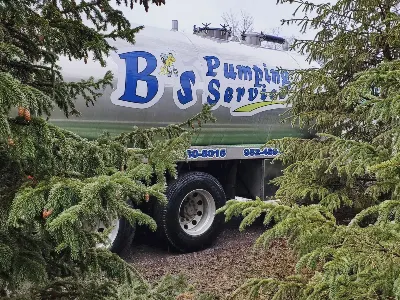
B's Pumping Service

5.0 (22) Lakeville, MN

Customers consistently praise this family-run team for quick, responsive communication and clear updates on progress and costs. Reviewers also appreciate fair pricing, thorough inspections, and helpful extras like before-and-after photos, and no recurring complaints appear.

  • Responsive
  • Fair pricing
  • Family-run

Services:PumpingInspectionService

Contact See reviews Best in Lakeville →

D&T Septic Services

4.8 (45) Andover, MN

Customers value the team's responsiveness, quick arrival, and clear explanations, with several saying they have relied on them for years. Reviewers also appreciate that the crew leaves work sites clean and that they handle installation projects with care.

  • Responsive team
  • Clear communication
  • Long-term clients

Services:InstallationPumpingService

Contact See reviews Best in Andover →

Meyer Sewer Service

4.8 (22) Cottage Grove, MN

Customers describe the crews as prompt, friendly, and thorough, often arriving early and taking care with the equipment and surroundings. Several people said the team took time to explain what the local requirements were and what they could do next.

  • Prompt service
  • Friendly crew
  • Septic pumping

Services:PumpingServiceCleaning

Contact See reviews Best in Cottage Grove →

Hennes Septic Pumping

4.7 (22) Chaska, MN

Customers consistently praise the company for prompt, reliable response and fair pricing, especially for both routine pumping and urgent mechanical problems. Reviewers also appreciate the professionalism and long-term relationships built with the technician.

  • Prompt response
  • Fair pricing
  • Long-term clients

Services:PumpingRepairService

Contact See reviews Best in Chaska →

Minnesota Septic Tank Laws & Requirements

Septic work in Minnesota is governed by a mix of state rules and county ordinances. Understanding which rules apply to your property helps you plan repairs, sales and upgrades without delays.

Who regulates it Minnesota Pollution Control Agency (MPCA), with county and local governments running permits and inspections

The MPCA develops technical and compliance criteria for septic systems (called SSTS), sets requirements for local SSTS programs, and certifies individuals and licenses businesses to do SSTS work. <cite index="9-8,9-9">Every county must adopt and enforce an SSTS ordinance that meets Minnesota Rules chapters 7080 and 7081, and counties must also permit and inspect systems in cities and townships that lack a compliant ordinance.</cite> Permits, point-of-sale inspections and setbacks beyond the state minimums vary by county, so check with your county.

1

Minnesota Septic Tank Laws

Septic tank work in Minnesota is regulated by the Minnesota Pollution Control Agency (MPCA), which sets technical and compliance criteria for septic systems, called SSTS. The MPCA also sets requirements for local SSTS programs and certifies individuals and licenses businesses to do SSTS work. Every county must adopt and enforce an SSTS ordinance that meets Minnesota Rules chapters 7080 and 7081. Counties must also permit and inspect systems in cities and townships that lack a compliant ordinance. Because local rules vary, confirm the requirements with your county before starting work.

2

Minnesota Septic Tank Requirements

Systems must be designed, installed, inspected, operated and maintained by appropriately licensed businesses and certified individuals. A property owner may install their own system without a license only if it treats wastewater from their own dwelling or seasonal dwelling, and the design must still be prepared by a licensed individual. Tanks cannot be placed in floodways or in areas subject to vehicular traffic. If the top of a tank will be less than two feet from final grade, its lid must be insulated to an R-value of ten. Systems with a pump must have an alarm to warn of failure.

3

Minnesota Septic Code

The state code is found in Minnesota Rules chapter 7080 for individual systems, which are designed for 5,000 gallons per day or less of sewage flow, and chapter 7082 for local program standards. Counties may adopt stricter rules, including shoreland setbacks. Setbacks from lakes, rivers and streams fall under chapters 6105 and 6120. For exact setback distances, check the state rule tables and your county ordinance rather than relying on general guidance.

Key rules at a glance (14), with official sources
TopicRuleSource
Who regulates<cite index="9-4">Under Minnesota Statutes chapters 103F, 103G, 115 and 116, the MPCA sets the minimum standards for local SSTS ordinances and administrative programs (Minn. Rules ch. 7082).</cite>revisor.mn.gov
Scope of the code<cite index="3-15">An individual system (ISTS) is one designed for 5,000 gallons per day or less of sewage flow.</cite> <cite index="3-17">The term SSTS covers both individual systems and midsized systems.</cite>revisor.mn.gov
Who may do the work<cite index="5-8">Rule 7080.1670 requires systems to be designed, installed, inspected, operated and maintained by appropriately licensed businesses and certified individuals, following part 7083.0700.</cite>andovermn.gov
Owner-installed systems<cite index="40-10">A property owner may install their own system without a license if it treats wastewater only from their own dwelling or seasonal dwelling.</cite> <cite index="38-6">County ordinances describe this exemption as covering a non-pressurized SSTS on land the individual owns.</cite> <cite index="40-1">The system must still be designed by an individual licensed under Minn. Rules 7083.0700.</cite>pinecountymn.gov
Inspection at property saleState law has no sale-time inspection requirement. <cite index="26-6,26-7">Minn. Stat. 115.55 subd. 5 requires an inspection in two circumstances, neither of which is a sale. One is adding a bedroom, where the local government cannot issue a building permit or variance unless the system has been inspected.</cite> <cite index="26-8">Point-of-sale compliance inspection comes from county and municipal ordinance and varies from county to county.</cite>madgettlaw.com
Example county point-of-sale rules<cite index="22-3,22-4">In Pine County, no inspection is needed if the county has on file either a new or replacement system certificate issued within 5 years or a compliance inspection report issued within 3 years.</cite> <cite index="23-6">St. Louis County says a Certificate of Compliance for an existing system is valid for three years.</cite>pinecountymn.gov
Winter sales<cite index="22-12,22-13">In Pine County, a sale between November 15 and April 15 requires a transfer agreement that includes completing a compliance inspection by the following June 1.</cite> <cite index="21-7">The City of Ramsey allows a similar arrangement for sales between November 1 and April 30.</cite>pinecountymn.gov
Who performs compliance inspections<cite index="20-4,20-6">A state-licensed inspector must do the inspection. The inspector checks that the tanks are watertight and that the drainfield has the minimum vertical separation from saturated soil or bedrock.</cite>co.sherburne.mn.us
Setbacks<cite index="31-1">The state rule sets setbacks for septic components in Table VII of Minn. Rules 7080.2150, subp. 2, item F.</cite> <cite index="29-12">Setbacks from lakes, rivers and streams are governed by chapters 6105 and 6120.</cite> I did not retrieve the table's distances from an official source, so check the rule or your county ordinance for exact figures. Counties may set stricter shoreland setbacks.revisor.mn.gov
Tank design and location<cite index="2-8">If the top of a sewage tank will be less than two feet from final grade, the tank lid must be insulated to an R-value of ten.</cite> <cite index="5-15">Tanks must not be placed in floodways or in areas subject to vehicular traffic.</cite>revisor.mn.gov
Pumps and alarms<cite index="29-10">An ISTS with a pump must have an alarm device to warn of failure.</cite> <cite index="29-6">If sewage is pumped to the septic tank from a dwelling, the tank capacity must be at least 50 percent greater than normal and have multiple compartments or tanks.</cite>andovermn.gov
Pumping and maintenanceI found no official state rule setting a pumping interval. <cite index="36-12">One secondary source says there is no state law mandating a pumping frequency, and that the MPCA recommends every three years for an average household.</cite> <cite index="8-6">One county ordinance requires systems without a management plan or operating permit to have their treatment tanks inspected and solids removed if needed.</cite> <cite index="34-5">Mower County requires the tank to be pumped as part of a compliance inspection.</cite>septictankhub.com
Plumbing code overlap<cite index="12-3">MPCA-licensed SSTS installers may install and repair external water service lines and building sewers.</cite> <cite index="12-6">MPCA-licensed SSTS designers must submit building sewer plans to the Department of Labor and Industry when designing new building sewers.</cite>pca.state.mn.us
Contractor disputes<cite index="18-6,18-9">The MPCA investigates written complaints and can suspend, restrict or revoke a license. Homeowners with contractor disputes should contact the Attorney General's Consumer Division.</cite>pca.state.mn.us

Official sources:MPCA – Local septic system programsMinn. Rules ch. 7080 – Individual Subsurface Sewage Treatment SystemsMinn. Rules ch. 7082 – Local ISTS ProgramsMPCA – SSTS and plumbing code fact sheet (wq-wwists4-43)MPCA SSTS License SearchUniversity of Minnesota – SSTS licensing and certification FAQ

Rules change and some counties add their own. Check with your county health department before you start work.

Septic Tank permits and licenses in Minnesota

A county SSTS permit is generally required before you install, replace, modify or alter a septic system. The property owner or the owner's agent usually applies for the permit before work begins, and licensed designers and installers often handle the paperwork. Minor repairs that do not change how the system functions, capacity or location may not need a permit, and some counties exempt replacing pumps, floats, electrical devices or tank baffles. Fees and forms differ by county, so contact your county planning or zoning office before scheduling work. To confirm a contractor's credentials, use the MPCA's SSTS License Search.

How much does septic tank pumping cost in Minnesota?

In Minnesota, septic tank pumping typically runs $290 to $555, with an average of $420, compared with a national range of $290 to $565 and an average of $430. A full septic tank installation averages $7,395 in the state, within a range of $3,450 to $11,835, while the national average is $7,500. Replacement averages $6,410 statewide, slightly below the national average of $6,500. Inspections average $540 in Minnesota, and repairs average $1,825. Costs vary with tank size, access and soil conditions, so ask each company for a written estimate.

ServiceIn MinnesotaNational
Septic Tank Pumping Cost $290 – $555 $290 – $565 -2%
Septic Tank Installation Cost $3,450 – $11,835 $3,500 – $12,000 -1%
Septic Tank Maintenance $295 – $495 $300 – $500 -1%
Septic Tank Inspection $195 – $890 $200 – $900 -2%
Septic Tank Replacement Cost $2,960 – $9,860 $3,000 – $10,000 -1%
Septic Tank Cost $285 – $555 $290 – $565 -2%
Septic Tank Cleaning Cost $295 – $690 $300 – $700 -2%
Septic Tank Repair Cost $640 – $2,960 $650 – $3,000 -1%
Drain Field $2,960 – $14,795 $3,000 – $15,000 -1%
Aerobic Septic System $195 – $590 $200 – $600 -1%

Typical ranges: national prices adjusted to the cost of living in Minnesota (BEA regional price parities). Your quote depends on your property.

Use the cost calculator

Septic Tank services in Minnesota: FAQ

Do I need a septic tank permit in Minnesota?

In most cases yes. A county SSTS permit is generally required before you install, replace, modify or alter a system. Some minor repairs that do not change the system's function, capacity or location may be exempt, so check with your county first.

Do I need a license to work on septic systems in Minnesota?

Businesses that design, install, maintain, inspect or service systems must be licensed with the MPCA and renewed each year. Individuals must also be certified in their specialty. Property owners may install their own system for their own dwelling, but the design must still be done by a licensed individual.

How can I check whether a septic contractor is licensed?

Use the MPCA's SSTS License Search to confirm a company's or individual's license and certification before you hire them. This helps you avoid unlicensed work that may not meet state and county requirements.

Get free quotes