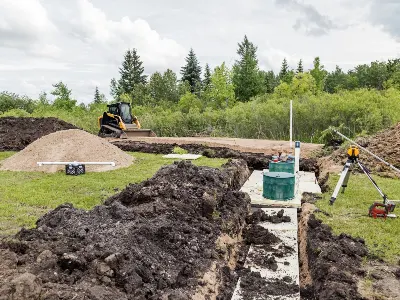
| Who regulates | The Board of Health and DOH wrote chapter 246-272A WAC, which covers location, design, installation, operation, maintenance and monitoring of on-site sewage systems. The local health officer enforces it and issues permits. | lawfilesext.leg.wa.gov |
| Rule timeline | The revised rule took effect April 1, 2025, except the Maintenance Service Provider approval requirement and the Property Transfer Inspection requirement. The Property Transfer Inspection requirement is effective February 1, 2027. | doh.wa.gov |
| Inspection at property sale | From February 1, 2027, DOH presentations say all on-site systems must be inspected before a property transfer, but the local health officer can waive this if the system is current on routine inspections. | sboh.wa.gov |
| Local sale rules already in place | King County already requires an inspection by a certified on-site system maintainer before title transfers. Thurston County requires the system to be inspected and all tanks pumped within 12 months before a Time of Transfer application. Snohomish County sellers must meet transfer requirements starting November 1, 2026, including a full inspection within the past 12 months. | kingcounty.gov |
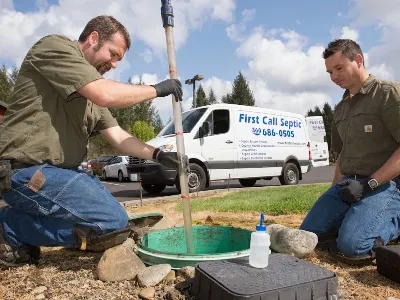
| Routine inspection and maintenance | Owners must have the system inspected at least once every three years if it is only a sewage tank and gravity drainfield, and annually for all other systems, unless the local health officer requires more often. Owners must also ask the local health officer for help if the system fails or is suspected to have failed. | apptest.leg.wa.gov |
| Setbacks (Table IV) | The drainfield and reserve area must be at least 100 ft from a well. The sewage tank and distribution box must be at least 50 ft from a well, or 100 ft from a public drinking water well. The drainfield must be 10 ft from a building foundation or in-ground pool and 5 ft from a property or easement line, and 100 ft from surface water measured from the ordinary high-water mark. | app.leg.wa.gov |
| Setback flexibility | The local health officer may increase setbacks where there is greater contamination potential. The officer may also allow the drainfield-to-well, spring or non-public surface water distance to be reduced to a minimum of 75 ft if the applicant demonstrates that the system meets specified criteria. DOH has also proposed amending the surface-water setbacks for public drinking water sources. | regulations.justia.com |
| Approved products | DOH keeps a list of registered on-site treatment and distribution products. Proprietary distribution products must be registered with DOH before permitting, sale and use, and a holding tank must be one reviewed and approved by DOH. | apps.leg.wa.gov |
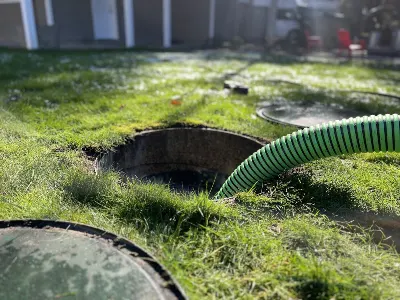
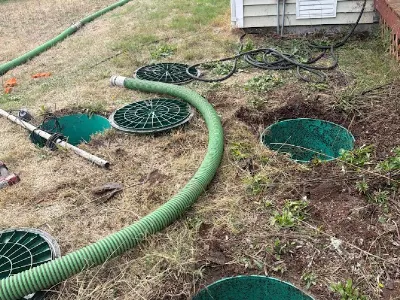
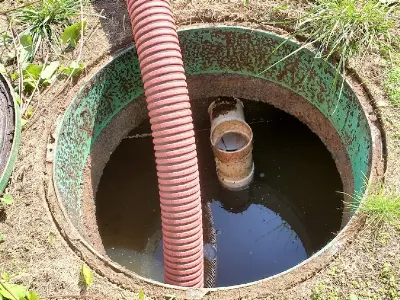
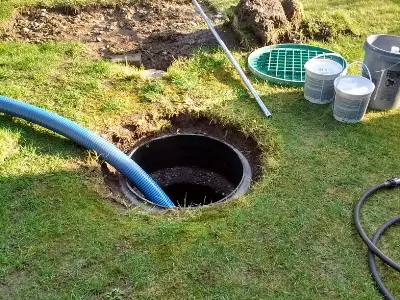
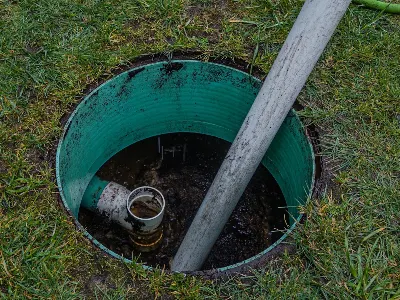
| Tank access | Sewage tank access for maintenance and inspection is required at finished grade. The local health officer may allow it to be a maximum of six inches below grade if a marker is installed at finished grade. | app.leg.wa.gov |
| Failed systems and sewer hookup | If the local health officer finds a system has failed, the officer may require hookup to a public sewer within 200 ft. The officer may instead permit repair or replacement only if a conforming system can be designed and installed. | sboh.wa.gov |