| Who regulates | DNREC's Division of Water is responsible for regulating and protecting Delaware's water supply, and its Groundwater Discharges Section is at 89 Kings Highway, Dover, DE 19901. | regulations.delaware.gov |
| Sale or transfer inspection | Section 3.31.13 of 7101 requires a property with an on-site system that is sold or transferred to have the system pumped by a Class F licensee and inspected by a Class H licensee before the sale is completed, with inspection forms sent to DNREC within 72 hours. | regulations.delaware.gov |
| Exceptions to the sale inspection | One secondary summary of the rule says the pump-out and inspection can be skipped for new property with a certificate of completion from the last 24 months, if the owner can show a pump-out and inspection from the last 36 months, or if there is a licensed operator or service contract with a certified service provider. I could not confirm this on the official page, so check the exact wording of 3.31.13 and its sub-sections. | usedeepsel.com |
| Conflicting source on sale inspections | One commercial site says Delaware does not mandate statewide septic inspections for real estate transactions. That conflicts with the regulation text quoted above, which I treated as authoritative. | septicseeker.com |
| Class H inspection details | Innovative/alternative systems, including advanced treatment units, may only be inspected by a Class H licensee who has also been certified through DNREC-approved training for that system, and a Class H license alone is not enough. | documents.dnrec.delaware.gov |
| Unimproved lots | Under Chapter 60, Title 7 of the Delaware Code, a site evaluation must be performed on unimproved lots prior to sale. | documents.dnrec.delaware.gov |
| Pumping and maintenance | DNREC's homeowner guide says to have the tank pumped by a Class F liquid waste hauler every two to three years, and more often if you have a garbage disposal. This is guidance, not a fixed statewide interval for homeowners. Third-party sites quote 3–5 years, so follow DNREC's guide. | documents.dnrec.delaware.gov |
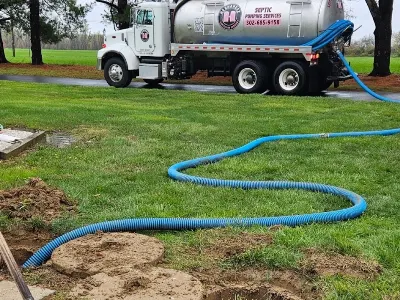
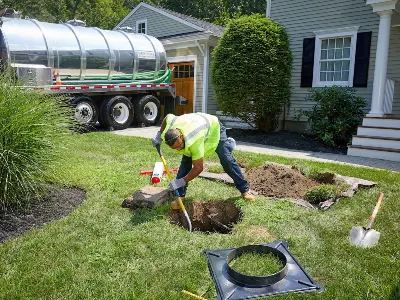
| Pumping method | Septic tanks may only be pumped through the manhole or access port of each tank or compartment. | regulations.delaware.gov |
| Tank design | All septic tanks must have a multi-compartment design with at least two compartments, and each tank needs a watertight access riser for each compartment that extends above grade. | regulations.delaware.gov |
| Prohibited components | All metal tanks and metal distribution boxes are prohibited and must be replaced when found. All cesspools and seepage pits are also prohibited and must be replaced within one year when found. | regulations.justia.com |
| Discharges to the system | No cooling water, air conditioning water, groundwater, oil, water softener backwash or roof drainage may be discharged into any system without DNREC's specific authorization. | regulations.delaware.gov |
| Repairs | Repair or replacement of any component of the system requires hiring an appropriately licensed Class E system contractor. | regulations.delaware.gov |
| Undocumented existing systems | If DNREC has no record of an existing system, no connection to it is permitted until an inspection is done with the septic tank and other listed components uncovered. This text is from a 2013 proposed revision, so check the current code. | regulations.delaware.gov |
| Approved products | DNREC's Residential Services Section maintains a list of septic system products reviewed and approved for use in Delaware. | dnrec.delaware.gov |
| Setbacks | I did not find the official septic setback distances (to wells, property lines, buildings or water) in the sources retrieved, so I am not stating any numbers. They are in 7 DE Admin Code 7101 and should be confirmed there or with your licensed designer. | regulations.delaware.gov |