Find your city

Type your city or ZIP code to see the best-rated septic service companies near you.

Get free quotes

Septic Tank Services in Alaska

The best-rated septic service companies across Alaska, plus state laws, permits and costs.

Finding reliable septic tank Alaska service starts with knowing who is qualified to work on your system and what it should cost. This guide covers the best-rated companies in the directory, the state rules that govern installation and repair, the permit and license basics, and typical prices compared with national averages.

3 cities10 companiesavg. 4.6★

Top 4 septic service companies in Alaska

The companies below are the highest-rated septic providers listed for Alaska, with their city and review count. Ratings are shown as they appear in the directory, so compare a few options before booking.

Show map

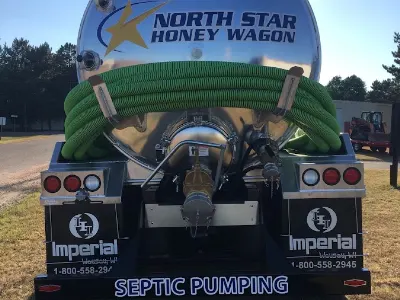
North Star Honey Wagon

5.0 (169) Fairbanks, AK 24/7

Customers value fast arrival, often within hours of calling, and technicians who explain problems clearly and work tidily. Several say the pricing was fair and that they avoided the high costs of other companies' failed attempts.

  • Fast response
  • Emergency service
  • Clear explanations

Services:PumpingServiceCleaning

Contact See reviews Best in Fairbanks →

Alaska Quality Septic

5.0 (90) Anchorage, AK 24/7

Customers praise the team's responsiveness, courteous installers, and careful site cleanup after leach field and tank replacements. Several reviewers say they rely on the company for routine pumping and keep returning for ongoing maintenance.

  • Leach field replacement
  • Responsive scheduling
  • Friendly crew

Services:PumpingReplacementInstallationDrain Field ServicesMaintenanceServiceCleaningRiser Installation

Contact See reviews Best in Anchorage →

Septic Pro

4.7 (62) Fairbanks, AK 24/7

Many customers praise punctual scheduling, a clean truck and hoses, and final bills that matched or came under estimates. One reviewer had a frozen-line job left unfinished, with a large charge and a mess that they had to clean up themselves.

  • Punctual
  • Clean operation
  • Frozen line thawing

Services:PumpingService

Contact See reviews Best in Fairbanks →

Septic Service Companies by city in Alaska

Listings for septic services in Alaska are concentrated in Fairbanks and Anchorage, with a smaller number in other areas. If you live elsewhere, expect to compare providers across a wider distance.

Alaska Septic Tank Laws & Requirements

Septic systems in Alaska are governed by a single state framework, with local governments able to add their own requirements. Understanding the core rules helps you avoid costly mistakes when installing, repairing or selling a property.

Who regulates it Alaska Department of Environmental Conservation (DEC), Division of Water, Wastewater Program

DEC regulates all septic systems statewide under 18 AAC 72 (Wastewater Treatment and Disposal). The rules cover who may install a system, which systems need plan approval, and separation distances. I found no statewide rule requiring an inspection at sale or a fixed pumping interval. Anchorage and other local governments may add their own requirements.

1

Alaska Septic Tank Laws

The Alaska Department of Environmental Conservation (DEC), Division of Water, Wastewater Program, regulates all septic systems in the state under 18 AAC 72, which covers wastewater treatment and disposal. The rules set out who may install a system, which systems need plan approval, and the required separation distances. Amendments to 18 AAC 72 took effect October 1, 2023, so older guides may be out of date. Anchorage and other local governments may add their own requirements on top of state rules.

2

Alaska Septic Tank Requirements

Under 18 AAC 72, a septic tank must be at least 100 feet from a private drinking-water source and from the mean annual high water level of a lake, river, stream or spring. The absorption field must sit 50 feet from steep slopes and 6 feet above bedrock or slow-draining soil. Tanks must meet Uniform Plumbing Code specifications and include access for maintenance. Every component of a conventional system also needs frost protection set by region.

3

Alaska Septic Code

The DEC Onsite Wastewater Systems Installation Manual explains how the code applies in practice, and DEC's real-estate guidance covers property sales. Systems that do not meet the construction standards or separation distances need a DEC waiver, and that request must be prepared by an Alaska-licensed engineer. DEC recommends pumping every 2 years, or once a year if you have a garbage disposal or hot tub, and advises against chemical additives and building over the tank or drainfield.

Key rules at a glance (15), with official sources
TopicRuleSource
Who regulatesDEC says all septic systems in Alaska are subject to 18 AAC 72, which sets out the qualified persons, system types and process needed for a system to be approved.dec.alaska.gov
Code changesDEC's installation manual says amendments to 18 AAC 72 took effect October 1, 2023. Older web guides and older versions of the code may be out of date, so check the current chapter.dec.alaska.gov
Who may design/installUnder 18 AAC 72, a conventional onsite system must be installed by a DEC-certified installer, an approved homeowner, or an Alaska-registered professional engineer.dec.alaska.gov
When an engineer is requiredAn engineer is required for systems serving multiple buildings, commercial buildings with flows over 500 gallons per day, non-domestic wastewater, and sites that cannot take a conventional system.dec.alaska.gov
Plan approvalConventional systems that meet the prescriptive standards can be installed without prior plan approval. Larger or non-conventional systems, such as those over 2,500 gpd on a lot or serving more than one lot or structure, need DEC plan approval before construction, and the plan review fee is set in 18 AAC 72.955.rural.dec.alaska.gov
Setback - private wellThe minimum separation between a private drinking-water source and an onsite disposal system, septic tank or soil absorption system is 100 feet (18 AAC 72.100). The Alaska installation manual says public community and non-community wells need 200 feet.aws.state.ak.us
Setback - surface waterA septic tank, soil absorption system, lift station or sewer manhole must be at least 100 feet from the mean annual high water level of a lake, river, stream, spring or slough, or from the mean higher high water level of tidal coastal waters.law.cornell.edu
Other separation distancesThe absorption field must be 50 feet from any slope steeper than 25% with a drop over 10 feet, and the tank must be 5 feet from the absorption field. The bottom of the distribution media must be 4 feet above the annual high water table and 6 feet above bedrock, clay, permafrost or soil that percolates slower than 120 minutes per inch.regulations.justia.com
WaiversA system that does not meet the construction standards or separation distances needs a DEC waiver. A waiver request must be prepared by an Alaska-licensed engineer.rural.dec.alaska.gov
Tank construction / approved tanksUnder 18 AAC 72.530 a septic tank must meet the Uniform Plumbing Code tank specifications, have a minimum volume from the code's size table, and have access for maintenance. DEC's installation manual refers readers to the ADEC Septic Tank handout for the current approved tank list, which I did not retrieve.law.cornell.edu
Frost protectionEvery component of a conventional system needs minimum frost protection by region. For example, Southwest Alaska needs two feet of soil cover.law.cornell.edu
Inspection at saleI found no official statewide requirement for a septic inspection at property sale. DEC's real-estate page advises gathering system documents and pumping records and scheduling an inspection early. It also advises inspecting steel tanks installed over 15 years ago for corrosion, and it charges a $25 fee to retrieve Document of Construction records. Lenders commonly ask for septic documentation.dec.alaska.gov
Pumping/maintenanceDEC recommends pumping every 2 years, or once a year if you have a garbage disposal, hot tub or whirlpool, and the manual says to pump when sludge or scum exceeds 6 inches. I found no state law setting a mandatory pumping interval. DEC also advises against chemical or biological additives and against building over the tank or drainfield.dec.alaska.gov
System failure18 AAC 72.090 defines system failure and sets duties for the owner of a failed system, such as using an approved facility for wastewater disposal.aws.state.ak.us
Local rules (Anchorage)A real-estate source reports that the Municipality of Anchorage requires its own permit and a state-registered engineer for design and inspection of onsite systems, so confirm local rules with the borough or municipality. This comes from a secondary source, not an official one.propertiesofalaska.com

Official sources:DEC – Options for Installing or Upgrading a Septic SystemDEC – Becoming a Certified Installer in AlaskaDEC – Onsite Wastewater Systems Installation Manual (OWSIM)DEC – Engineered Wastewater Disposal SystemsDEC – Onsite Wastewater Systems in Real Estate TransactionsDEC – How to Maintain Your Septic System

Rules change and some counties add their own. Check with your county health department before you start work.

Septic Tank permits and licenses in Alaska

Conventional systems that meet DEC's prescriptive standards can usually be installed without prior plan approval, though documentation of construction is still required. Larger, non-conventional or engineered systems, and systems needing a waiver, must receive DEC plan approval before construction, and a plan review fee applies under 18 AAC 72.955. Anchorage may require its own local permit and a state-registered engineer for design and inspection, so confirm local rules with the municipality before starting work.

How much does septic tank pumping cost in Alaska?

In Alaska, septic tank pumping typically runs $300 to $580, with an average of $440, compared with a national range of $290 to $565 and an average of $430. Installation averages $7,675 in the state, against a national average of $7,500. Replacement averages $6,655 in Alaska versus $6,500 nationally, and drain field work averages $8,190 versus $8,000. Prices sit close to national figures, so expect the largest variation to come from system size and site conditions.

ServiceIn AlaskaNational
Septic Tank Pumping Cost $300 – $580 $290 – $565 +2%
Septic Tank Installation Cost $3,585 – $12,285 $3,500 – $12,000 +2%
Septic Tank Maintenance $305 – $510 $300 – $500 +2%
Septic Tank Inspection $205 – $920 $200 – $900 +3%
Septic Tank Replacement Cost $3,070 – $10,235 $3,000 – $10,000 +2%
Septic Tank Cost $295 – $580 $290 – $565 +2%
Septic Tank Cleaning Cost $305 – $715 $300 – $700 +2%
Septic Tank Repair Cost $665 – $3,070 $650 – $3,000 +2%
Drain Field $3,070 – $15,355 $3,000 – $15,000 +2%
Aerobic Septic System $205 – $615 $200 – $600 +2%

Typical ranges: national prices adjusted to the cost of living in Alaska (BEA regional price parities). Your quote depends on your property.

Use the cost calculator

Septic Tank services in Alaska: FAQ

Do I need a septic tank permit in Alaska?

Conventional systems that meet DEC's standards can often be installed without prior plan approval, but you still need construction documentation. Larger or non-conventional systems need DEC plan approval and a fee before work begins. Check with your local municipality, since Anchorage may require a separate permit.

Is a septic license required in Alaska?

Alaska has no general septic contractor license. Conventional system installers must be DEC Certified Installers, who complete training, pass a written exam and pay an $850 fee for a two-year certification. Homeowners can also become approved to install one system on their own owner-occupied home, and non-conventional systems require an Alaska-registered professional engineer.

Who can install a septic system in Alaska?

Under 18 AAC 72, a conventional onsite system must be installed by a DEC-certified installer, an approved homeowner, or an Alaska-registered professional engineer. Engineers are required for multi-building systems, commercial flows over 500 gallons per day, and sites that cannot support a conventional system.

Get free quotes