Find your city

Type your city or ZIP code to see the best-rated septic service companies near you.

Get free quotes

Septic Tank Services in Montana

The best-rated septic service companies across Montana, plus state laws, permits and costs.

Looking for a septic tank in Montana? This page covers the best-rated septic tank companies in cities across the state, how state and county rules shape septic work, and what typical projects cost. Montana uses a mix of state standards and local permits, so the rules you face depend partly on where your property sits. Use the details below to plan your project and compare local providers.

7 cities29 companiesavg. 4.6★

Top 10 septic service companies in Montana

Montana septic tank companies in the directory average 4.6 stars across the listed providers. Reviews vary a lot in volume, so a company with a high rating and many reviews is a useful starting point when you compare options in your area.

Show map

Helena Septic

5.0 (42) Helena, MT 24/7

Customers praise the fast, same-day response for emergencies, including a backup that was cleared and pumped quickly. Reviewers consistently describe the crew as polite, professional, and easy to schedule with.

  • Emergency response
  • Professional crew
  • Same-day service

Services:PumpingService

Contact See reviews Best in Helena →

Cowboy Septic

5.0 (36) Helena, MT

Reviewers value quick scheduling, prompt arrivals, and reasonable pricing, along with staff who go out of their way during emergencies. Several customers also appreciated the free, practical advice on keeping their system in good condition.

  • Fast response
  • Maintenance education
  • Fair pricing

Services:PumpingMaintenanceService

Contact See reviews Best in Helena →

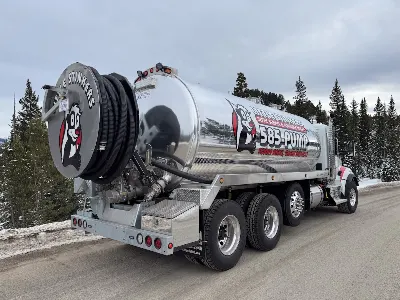
Little Stinkers

4.8 (34) Bozeman, MT

Customers praise prompt, professional crews with good equipment who leave worksites tidy, and the company is often used for event portable toilets. A recurring complaint is pricing, with one reviewer objecting to higher starting rates and added fuel and payment-processing fees.

  • Portable toilets
  • Septic pumping
  • Tidy crews

Services:PumpingCleaningService

Contact See reviews Best in Bozeman →

Scenic City Enterprises

4.8 (19) Bozeman, MT

Customers consistently highlight fast scheduling, including same-day or short-notice visits, and courteous crews who explain the work as they do it. Many also describe the pricing as reasonable and the staff, both in the field and the office, as helpful.

  • Fast scheduling
  • Septic pumping
  • Reasonable pricing

Services:PumpingService

Contact See reviews Best in Bozeman →

CLR Services

4.7 (22) Butte, MT

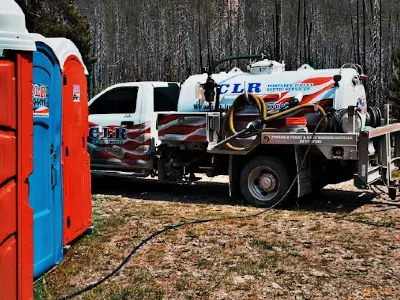
Clients describe the crew as professional, accommodating, and affordable, with quick scheduling for septic jobs. One customer noted the team thoroughly cleaned both chambers of a neglected tank and fixed the problems they found.

  • Prompt scheduling
  • Thorough cleaning
  • Affordable

Services:PumpingCleaningRepair

Contact See reviews Best in Butte →

Septic Service Companies by city in Montana

Septic tank services are listed in several Montana cities, including Billings, Kalispell, Helena, Bozeman and Butte. Local providers know the soil, county permit steps and inspection habits of their own area, so choosing someone nearby usually makes scheduling and follow-up easier.

Montana Septic Tank Laws & Requirements

Septic work in Montana is shaped by state standards and county-level administration. Knowing who sets the rules, and who signs off on your permit, helps you plan before any digging starts and avoids delays later in the process.

Who regulates it Montana Department of Environmental Quality (DEQ), with county sanitarians and health departments handling local permits

DEQ sets the state rules and technical standards (ARM Title 17, chapter 36, and Circular DEQ-4), but county sanitarians and environmental health departments mostly administer and enforce them. In Montana, a homeowner needs a local septic permit and a county-licensed installer. Pumpers are licensed by the state, and no statewide inspection at sale is required.

1

Montana Septic Tank Laws

The Montana Department of Environmental Quality (DEQ) sets the state rules and technical standards for septic systems, found in ARM Title 17, chapter 36, and Circular DEQ-4. In practice, county sanitarians and environmental health departments handle most permits and enforcement. Every septic system must be designed and installed to DEQ Circular 4. Pumpers are licensed by the state, while installers are typically licensed by the county, and there is no statewide inspection required at the time of sale.

2

Montana Septic Tank Requirements

Before installing, replacing or significantly altering a system, you need a local permit from your county health department. For parcels under 20 acres, DEQ generally issues a Certificate of Subdivision Approval, and approved locations cannot be changed without DEQ approval. Setbacks from drinking water wells are set in ARM 17.36.918, with a minimum of 50 feet from sealed tank components and 100 feet from the absorption system for individual wells. Some counties also require the installer to call for an inspection before backfilling.

3

Montana Septic Code

The septic code combines DEQ administrative rules with county policies. ARM 17.36.918 sets horizontal setbacks for small systems, and ARM 17.36.323 covers setbacks for subdivision lots. If a public sewer is readily available within a set distance, wastewater generally must connect to it. DEQ also has primary responsibility for public wastewater systems. Because county details differ, confirm the current code with your local sanitarian before you design or build.

Key rules at a glance (15), with official sources
TopicRuleSource
Who regulates<cite index="1-3,1-4">DEQ gives sanitation approval (a Certificate of Subdivision Approval, or COSA) for parcels under 20 acres, and county health departments issue and inspect the septic permit.</cite>deq.mt.gov
Design standard<cite index="3-1">All septic systems must be designed and installed to DEQ Circular 4.</cite> The Lincoln County page links the 2023 edition.lincolncountymt.us
Permit before installation<cite index="3-2">Lincoln County says a local wastewater treatment system permit is always required before a system is installed.</cite> <cite index="1-8">Teton County says a permit application is still required even when the parcel has prior DEQ approval.</cite>tetoncountymt.gov
Parcels under 20 acres<cite index="7-1">A property under 20 acres (not counting county road frontage) likely needs a COSA from DEQ.</cite> <cite index="1-5">The approved locations cannot be changed without DEQ approval.</cite>carbonmt.gov
Parcels without prior approval<cite index="1-9,1-10">If neither DEQ nor the county has approved the system, a site evaluation must be done, and a new structure may also need a nondegradation analysis.</cite>tetoncountymt.gov
Inspection during construction<cite index="13-8">In Richland County the installer must call the Health Department for an inspection before backfilling.</cite> <cite index="14-1">In Carbon County the installer must call at least 48 hours before installation is complete to request an inspection.</cite>richland.org
Setbacks (ARM 17.36.918, small systems)<cite index="24-4">For individual and shared drinking water wells, the minimum setback is 50 feet from sealed components such as the tank and 100 feet from the absorption system. For public or multi-user wells it is 100 feet for both.</cite> <cite index="24-10">The reviewing authority may require greater distances if site conditions call for it.</cite>law.cornell.edu
Setbacks (subdivision rule)ARM 17.36.323 holds the setback table for subdivision lots. <cite index="20-5">Sewer mains crossing water mains need at least 18 inches of vertical separation unless a waiver is granted.</cite> I did not confirm the full Table 2 values from the official text.law.cornell.edu
Inspection at property saleNo statewide point-of-sale septic inspection is required. This comes from secondary sources, and <cite index="32-9,32-10">some counties may have their own point-of-sale rules, so check with the local sanitarian.</cite> <cite index="30-11">One real-estate source says a 2011 disclosure act requires a signed septic disclosure from the seller and leaves any inspection optional unless a lender requires it.</cite> I could not verify that Act in official text.septictankhub.com
Legislative history of sale inspections<cite index="29-6">In 2011 the Lewis and Clark County Health Department adopted a maintenance program that has owners report on their systems to the Health Department every 3 to 5 years, depending on how heavily the system is used.</cite> <cite index="29-5">That program does not link the inspection to the time of sale.</cite>archive.legmt.gov
Pumping and maintenanceI found no official statewide mandatory pumping interval. A non-official source says <cite index="33-6">tanks should be pumped every 3 to 5 years and that DEQ recommends inspections every 3 years.</cite> Check county rules, and see DEQ's Homeowner's Guide to Septic Systems.deq.mt.gov
Pumper licensing (state)<cite index="40-3">Under MCA 75-10-1210, no one may clean cesspools, septic tanks or privies, or dispose of septage, as a business unless licensed by DEQ.</cite> <cite index="42-6">Pumper licenses expire December 31.</cite>mca.legmt.gov
Installer licensing (county)<cite index="3-6">Lincoln County requires an Installer License issued by the county to construct or alter a septic system.</cite> <cite index="14-9">Carbon County does not accept installer licenses issued by other counties.</cite> <cite index="18-8,18-9">Flathead County charges $120 for the licensing test and $65 a year to renew.</cite>flatheadcounty.gov
Connection to public sewer<cite index="22-10">If a DEQ-approved public collection and treatment system is readily available within a set distance, wastewater must go to that public system.</cite> The ARM 17.36.914(6) reference and distance come from an older document and need checking against the current rule.deq.mt.gov
Public systems<cite index="3-5">DEQ has primary responsibility for public wastewater systems, defined as serving more than 24 persons for more than 60 days a year or having more than 14 connections.</cite>lincolncountymt.us

Official sources:DEQ Engineering Infrastructure & SubdivisionsDEQ Septic Tank Pumper programMCA 75-10-1210 License requiredARM 17.36.918 Horizontal setbacksARM 17.36.323 SetbacksLincoln County Septic Permitting

Rules change and some counties add their own. Check with your county health department before you start work.

Septic Tank permits and licenses in Montana

Most septic projects start with a permit from your county health department, which is required before installing, replacing or significantly altering a system. Applications typically need either a nondegradation analysis for larger or older parcels, or DEQ subdivision approval with a site plan for smaller lots under 20 acres. Permit fees and forms vary by county, and some counties charge a set fee such as the $200 listed by Richland County. Contact your county sanitarian early to confirm the exact documents and inspection schedule.

How much does septic tank pumping cost in Montana?

Typical Montana septic costs run a little below national averages. Pumping averages about $405 in Montana against roughly $430 nationally, with a state range of $275 to $535. Installation averages around $7,100 in Montana compared with $7,500 nationally, and replacement averages about $6,150 versus $6,500. Repairs average $1,750 in Montana against $1,850 nationally. Prices depend on tank size, access, soil and local permit fees, so use these ranges as a planning guide.

ServiceIn MontanaNational
Septic Tank Pumping Cost $275 – $535 $290 – $565 -6%
Septic Tank Installation Cost $3,315 – $11,355 $3,500 – $12,000 -5%
Septic Tank Maintenance $285 – $475 $300 – $500 -5%
Septic Tank Inspection $190 – $850 $200 – $900 -5%
Septic Tank Replacement Cost $2,840 – $9,465 $3,000 – $10,000 -5%
Septic Tank Cost $275 – $535 $290 – $565 -6%
Septic Tank Cleaning Cost $285 – $665 $300 – $700 -6%
Septic Tank Repair Cost $615 – $2,840 $650 – $3,000 -5%
Drain Field $2,840 – $14,195 $3,000 – $15,000 -5%
Aerobic Septic System $190 – $570 $200 – $600 -5%

Typical ranges: national prices adjusted to the cost of living in Montana (BEA regional price parities). Your quote depends on your property.

Use the cost calculator

Septic Tank services in Montana: FAQ

Do I need a septic tank permit in Montana?

Yes. You must get a permit from your county health department before installing, replacing or significantly altering a septic system. The application may require a nondegradation analysis or DEQ subdivision approval, depending on lot size and history.

Do I need a septic license in Montana?

Pumpers must be licensed by DEQ under MCA 75-10-1210 to clean septic tanks as a business. Installers are generally licensed by the county, and requirements differ by county, so check with your local health department.

Is a septic license needed for a septic tank in Montana?

A licensed pumper is needed for pumping work, and a county-licensed installer is needed to construct or alter a system in many counties. Ask any company you hire to confirm its state or county license before work begins.

Get free quotes